Back to Blogs
Why Thailand Is Called the Land of Smiles
PublishedMarch 14, 2026
CategoryTravel Guide
AuthorBayard Team
There is a moment every traveller experiences in Thailand — usually within the first few hours of landing. A street vendor waves you over with a grin. A tuk-tuk driver laughs at your attempt to say “Sawadee.” A temple guide bows gently and smiles before speaking a single word.
No one tells you to expect this warmth. It just happens.
This is why Thailand has carried its famous nickname — “The Land of Smiles” — for decades. And for Indian travellers especially, it is one of the most visited international destinations year after year, with over 2 million Indians travelling to Thailand in 2024 alone.
In this guide, we explore what truly lies behind that smile — the culture, the people, the Buddhist values, the festivals, the food — and why Thailand continues to be one of the most rewarding trips you can plan from India.
The Real Story Behind the Nickname
Thailand’s nickname dates back to the 1960s, when the Thai government used it as part of a national tourism campaign. Posters, travel magazines, and international promotions carried the slogan, positioning Thailand as a warm, welcoming destination for global visitors.
But the nickname stuck not because of marketing — it stuck because it turned out to be true.
In Thai culture, a smile carries layers of meaning. It can express happiness, politeness, apology, or even discomfort in a difficult situation. Thai society is built around the idea of “kreng jai” — a deep-rooted cultural value of not wanting to impose or cause discomfort to others. Smiling is one of the most natural ways this plays out in everyday interactions.
The result for visitors: everywhere you go in Thailand — markets, temples, hotels, taxis, rural villages — you are met not with indifference but with genuine warmth. And that feeling stays long after the trip ends.
The Buddhist Foundation of Thai Hospitality
To understand Thailand’s culture, you have to understand Buddhism, which shapes nearly every aspect of daily life in the country. Around 95% of Thailand’s population practices Theravada Buddhism.
Buddhist teachings emphasise:
• Metta (loving kindness) — treating every person with care and goodwill
• Karuna (compassion) — being moved by the suffering of others
• Upekkha (equanimity) — remaining calm and balanced in all situations
• Dana (generosity) — giving without expectation
These are not abstract ideals in Thailand — they show up in how food stall owners interact with customers, how monks walk silently through morning markets, and how locals respond to lost tourists with patience rather than irritation.
When you visit famous temples like Wat Phra Kaew in Bangkok or Doi Suthep in Chiang Mai, you are not just sightseeing. You are stepping into the living framework of a culture built on kindness.
What Makes Thailand So Popular with Indian Travellers
Thailand sits in a rare sweet spot for Indian travellers — it offers an international travel experience without the complexity or expense of long-haul destinations.
Here is why over 2 million Indians chose Thailand in 2024:
Factor | Why It Works for Indians |
Short flight time | 3–5 hours from most Indian cities |
Affordable pricing | Food, stays, and experiences cost a fraction of Europe |
Indian food availability | Indian restaurants and vegetarian options are widely available in Bangkok, Phuket, Pattaya |
Familiar tropical climate | Not a shock to the system like cold-weather destinations |
Visa accessibility | Visa on Arrival available at major Thai airports |
Wide variety | Beaches, temples, mountains, nightlife, wellness — all in one country |
Honeymooner-friendly | Krabi, Koh Samui, and Phi Phi Islands are among Asia’s most romantic settings |
Visa for Indians: What You Need to Know (2026)
Indian passport holders require a visa to enter Thailand. The good news — the process is straightforward.
Two main options:
1. Visa on Arrival (VOA) Available at major international airports including Suvarnabhumi (Bangkok) and Phuket International Airport. Suitable for short trips. This allows a stay of up to 15 days. To avoid long queues at immigration, use the express lane if available — it saves significant time on arrival.
2. Tourist Visa (TR Visa) Applied for in advance at the Royal Thai Embassy in India (Delhi, Mumbai, Chennai, Kolkata). Allows a longer stay and is recommended for trips of 10 days or more. Provides more flexibility for multi-city itineraries.
Documents needed for both: - Valid passport (minimum 6 months validity from travel date) - Return ticket confirmation - Hotel bookings - Sufficient funds proof - Passport-size photographs
Bayard Tip: If you are travelling during peak season (November–February) or on a group departure, apply for a tourist visa in advance to avoid delays at the airport immigration counter.
Region-by-Region Guide: Where to Go in Thailand
Thailand is not a single destination — it is a country of distinct regions, each offering a completely different experience.
🏙️ Central Thailand — Bangkok
Bangkok is one of Asia’s most extraordinary cities. It is loud, fast, layered, and impossible to forget.
Best months to visit: November – February
Top experiences: - Grand Palace & Wat Phra Kaew — the spiritual and royal heart of Thailand - Wat Arun (Temple of Dawn) — breathtaking at sunrise and sunset - Floating markets — Damnoen Saduak and Amphawa for an authentic local experience - Chatuchak Weekend Market — one of Asia’s largest markets with over 15,000 stalls - Khao San Road — the cultural crossroads of backpackers and local nightlife - Iconsiam — a world-class riverfront mall for those who love luxury shopping
Bangkok rewards slow exploration. Allow at least 3 nights in the city.
🏔️ Northern Thailand — Chiang Mai & Beyond
Chiang Mai is often described as Bangkok’s gentler, more spiritual sibling. Surrounded by mountains and ancient temples, it is a deeply immersive cultural destination.
Best months to visit: October – February
Top experiences: - Over 300 ancient temples, including Doi Suthep (perched on a mountain above the city) - Elephant Nature Park — a responsible sanctuary for rescued elephants - Night Bazaar and Sunday Walking Street — for local crafts, food, and live music - Mountain trekking through hill tribe villages - Thai cooking classes — among the best culinary experiences in Asia - Yi Peng Lantern Festival (November) — one of the most photographed events in the world
Chiang Mai is also one of the most budget-friendly cities in Thailand, making it ideal for longer stays.
🏖️ Southern Thailand — Beaches, Islands & Sunsets
Southern Thailand is where most Indian honeymooners and beach lovers head — and for good reason.
Best months to visit: December – April (Andaman Coast: Phuket, Krabi, Phi Phi) | May – October (Gulf Coast: Koh Samui, Koh Phangan)
Key destinations:
Phuket — Thailand’s largest island and most well-developed beach destination. Patong Beach for nightlife, Kata and Karon Beach for families, Surin and Kamala Beach for luxury.
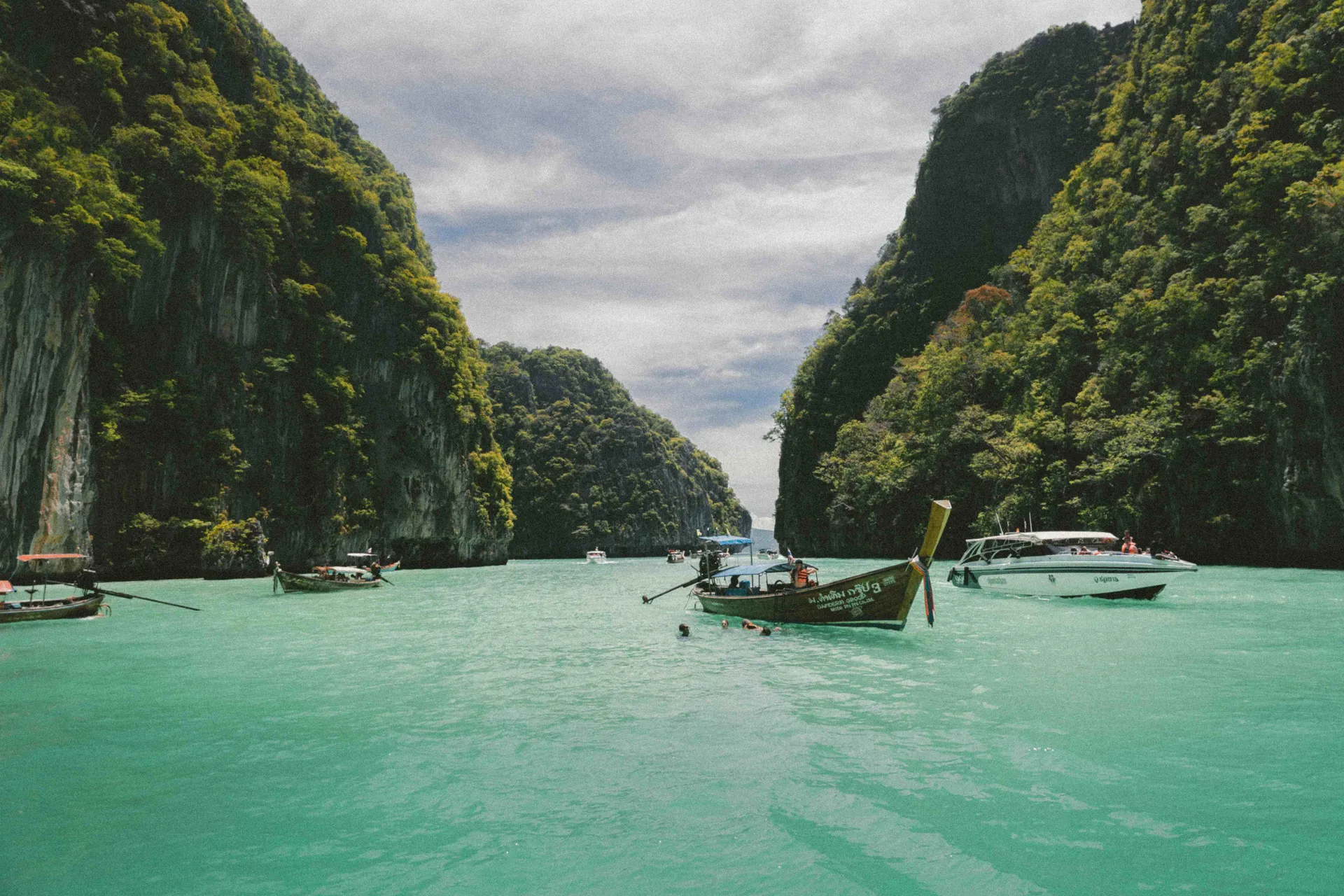
Krabi — dramatic limestone cliffs, turquoise water, and a more laid-back atmosphere than Phuket. Famous for Four Islands tour, Railay Beach (accessible only by boat), and Tiger Cave Temple with its 1,237-step climb.
Phi Phi Islands — postcard-perfect beaches made famous by the film The Beach. Best for snorkelling, diving, and island hopping.
Koh Samui — coconut groves, luxury resorts, and quieter beaches. A favourite for couples and families alike.
Activities across the islands: - Snorkelling and scuba diving (visibility up to 30 metres in the Andaman Sea) - Island hopping by speedboat or longtail boat - Sunset cocktail cruises - Sea kayaking through mangrove forests - Thai massages on the beach
Thailand Festival Calendar 2026
Experiencing a Thai festival is like nothing else in the world. Here are the ones worth planning your trip around:
Festival | Location | Month | What Happens |
Songkran (Thai New Year) | Nationwide | April | The world’s biggest water fight — streets flood with celebrations |
Yi Peng Lantern Festival | Chiang Mai | November | Thousands of paper lanterns released into the night sky |
Loi Krathong | Nationwide | November | Flower floats released on rivers and lakes at night |
Vegetarian Festival | Phuket | October | 9-day festival with vivid street processions |
Candle Festival | Ubon Ratchathani | July | Massive hand-carved wax sculptures paraded through the city |
Phi Ta Khon (Ghost Festival) | Loei Province | June | Colourful ghost masks and traditional Isan culture |
Bayard Tip: Book your trip early if you plan to travel during Songkran (April) or Loi Krathong (November). Accommodation fills up quickly, especially in Chiang Mai.
Thai Food for Indian Travellers: What to Eat, What to Avoid
Thai food is widely considered among the top 5 cuisines in the world — and Indian travellers are in for a treat. The flavours are bold, aromatic, and deeply satisfying.
Must-Try Dishes
Dish | What It Is | Vegetarian? |
Pad Thai | Stir-fried rice noodles with tamarind, peanuts, and your choice of protein | Can be made veg ✅ |
Tom Yum Soup | Lemongrass and kaffir lime broth, fragrant and slightly spicy | Veg version available ✅ |
Massaman Curry | Rich, mildly spiced curry with coconut milk — closest to Indian palate | Veg version available ✅ |
Green Curry | Aromatic coconut curry with basil and vegetables | Veg version available ✅ |
Som Tum (Papaya Salad) | Spicy, tangy shredded papaya salad | Can be made veg ✅ |
Mango Sticky Rice | Sweet dessert with glutinous rice and fresh mango | Fully vegetarian ✅ |
Khao Soi | Chiang Mai’s famous curry noodle soup — a must try up north | Veg version available ✅ |
Food Tips Specifically for Indians
• Thai cuisine uses fish sauce and palm oil in most dishes — always specify “no fish sauce” if vegetarian
• In Bangkok, Phuket, and Pattaya, Indian restaurants are widely available
• Fresh tropical fruits are everywhere and inexpensive — mangoes, rambutans, dragon fruit, and durian
• At remote destinations like Ayutthaya, full Indian menus may not be available — plan accordingly
• Street food from busy markets is generally safe — go where locals eat
Essential Travel Tips for Indians Visiting Thailand
1. Respect temple etiquette Dress modestly when entering temples — shoulders and knees covered. Remove shoes at the entrance. Never point your feet toward a Buddha image.
2. Learn a few words of Thai “Sawadee Kha” (women) / “Sawadee Khrap” (men) — Hello / Goodbye “Khob Khun” — Thank you Even a basic greeting earns a warm and genuine response from locals.
3. Currency and payments Thailand uses the Thai Baht (THB). Exchange money at official booths or use ATMs at airports. Carry some cash for street markets and smaller vendors. Credit cards are accepted at hotels and malls.
4. Transport options - BTS Skytrain and MRT in Bangkok — clean, affordable, efficient - Grab app (equivalent to Uber) — works across Thailand - Tuk-tuks — negotiate the price before getting in - Songthaew (red trucks) in Chiang Mai — the local shared taxi
5. Safety Thailand is generally a safe destination for Indian travellers, including solo women travellers. Standard precautions apply — keep valuables secure in crowded markets, avoid unlicensed tour operators, and use hotel safes.
6. Bargaining Bargaining is expected and normal at markets. Start at 50% of the asking price and work up from there. Smiling while bargaining always helps.
How Many Days Do You Need?
Trip Style | Duration | What You Can Cover |
Quick getaway | 5–6 nights | Bangkok + Phuket or Bangkok + Koh Samui |
Classic Thailand | 7–8 nights | Bangkok + Chiang Mai + one beach destination |
Comprehensive | 10–12 nights | Bangkok + Chiang Mai + Krabi + Phi Phi Islands |
Slow travel | 14+ nights | Full north-to-south experience with offbeat stops |
Most Indian travellers find that 7–10 days gives the perfect balance of cities, culture, and beaches.
Frequently Asked Questions
1)Why is Thailand called the Land of Smiles?
The nickname has both cultural and historical roots. Thai culture values social harmony and hospitality, with smiling used to express friendliness, gratitude, and respect. The Thai government also promoted this as a tourism identity from the 1960s onwards.
2)Do Indians need a visa for Thailand in 2026?
Yes, Indian passport holders require a visa. Options include Visa on Arrival (15 days) and Tourist Visa applied in advance (longer stay).
3)What is the best time to visit Thailand from India?
November to February is ideal — cool temperatures, minimal rain, and peak festival season. December and January are particularly popular for honeymooners and families.
4)Is Thailand expensive for Indians?
Thailand is one of the most affordable international destinations from India. A comfortable trip with 3-star accommodation, street food, and local transport can be managed at ₹70,000–₹1,00,000 per person for 7 nights, depending on the itinerary and season.
5)Is Thai food suitable for Indian vegetarians?
Yes, with some planning. Vegetarian and vegan options are widely available, especially in cities. Always clarify “no fish sauce” when ordering.
6)What should I not miss in Thailand?
Grand Palace and Wat Phra Kaew in Bangkok, Doi Suthep in Chiang Mai, Railay Beach in Krabi, and the Phi Phi Islands. If timing allows, the Yi Peng Lantern Festival in Chiang Mai is a once-in-a-lifetime experience.
Plan Your Thailand Trip with Bayard Vacations
At Bayard Vacations, we have been crafting Thailand journeys for Indian travellers since 2020 — not cookie-cutter tours, but experiences designed around what you actually want to see and do.
Whether you’re planning your first international trip, a romantic honeymoon in Krabi, a family holiday with elderly parents, or a friends group getaway to Bangkok and Pattaya — we build an itinerary that fits your pace, your preferences, and your budget.
Our Thailand packages cover: - Bangkok city stays - Chiang Mai cultural experiences - Phuket, Krabi, and island packages - Fixed group departures throughout the year - Fully customised private itineraries
Ready to experience the Land of Smiles for yourself?
Explore Thailand Packages | Talk to a Travel Expert
Bayard Vacations — Every journey deserves to feel personal.
Ready to go?
Explore Thailand Packages
Tags:
Bayard VacationsBayard international toursBayard travel agencyBayard holiday packagesinternational tour packages from IndiaAsia tour packagescustomized international holidayshoneymoon packages abroadfamily international toursluxury travel packages
Start Your Adventure
Our travel experts are ready to plan your next dream vacation.
No spam, only pure inspiration.
Trending Thailand Packages
Discover carefully curated itineraries for your holiday in Thailand


Related Articles
Continue your discovery with more travel insights