
meghalaya
Meghalaya
Northeast Indian state known for living root bridges, rain-rich regions, and the traditions of Khasi, Jaintia, and Garo tribes.
5+
packages
20k
Travelers
4.9
Rating
Many +
Activities
Explore
Destination Overview
About Meghalaya
The abode of clouds and sacred groves, where matriarchal traditions thrive, waterfalls cascade endlessly, and the world's wettest place whispers ancient stories.
Meghalaya, the "Abode of Clouds," is a premier northeast India tourism destination. Steeped in tribal culture, the state preserves the unique matriarchal society of the Khasi, Garo, and Jaintia hills, where indigenous traditions and sacred groves flourish alongside colonial history. Meghalaya offers an unparalleled blend of adventure travel, eco-tourism, and rich heritage sites for modern travelers.
Best TimeOct - May
CurrencyINR (₹)
ClimateTropical Humid Subtropical
Time ZoneIST (UTC+5:30)
LanguageKhasi, Garo, English
Travel PassIndian Passport / Visa
CapitalShillong
Population3.0M
Best Time
Oct - May
Currency
INR (₹)
Climate
Tropical Humid Subtropical
Time Zone
IST (UTC+5:30)
Language
Khasi, Garo, English
Travel Pass
Indian Passport / Visa
Capital
Shillong
Population
3.0M
Why Choose meghalaya?
Matriarchal Society & Unique Gender Traditions
Meghalaya unique: matriarchal Khasi and Garo societies. Property, inheritance through mother (youngest daughter = Ka Khyndai inherits ancestral home). Men maintain paternal family but reside in wife's home (Khyndai system). Marriage sacred; divorces rare; women economically independent. Gender equality embedded cultural DNA. Khasi women merchants, farmers, property owners. Sacred role: mother venerated. Modern society balances tradition-modernity tension.
Sacred Groves & Environmental Stewardship
Meghalaya preserves 1,500+ sacred groves (law kyntang, sacred forests). Community-managed; illegal logging forbidden. Biodiversity hotspots: endemic species, medicinal plants. Animistic tradition: spirits protect forests. Conservation model: indigenous peoples = environmental guardians. Climate regulation; water source protection. UNESCO recognition pending; global significance. Living legacy: traditional ecological knowledge.
Waterfall Paradise & Geological Wonder
Meghalaya world's wettest place: Cherrapunji (10,794mm annual rainfall). 1,000+ waterfalls; Living Root Bridges (Khasi engineering marvel). Jaintia Hills limestone karst terrain; underground rivers, caves. Geological diversity: plateaus, cliffs, valleys. Tourism boom: adventure activities (caving, climbing, trekking, waterfalls). Natural beauty attracts international visitors; sustainability challenges emerging.
Khasi & Garo Tribal Heritage
Khasi language (Austro-Asiatic); Mon-Khmer origin. Garo language (Sino-Tibetan). Oral traditions preserve mythology, folklore. Traditional music: bamboo instruments (Shynta, Suitnia), drum beats. Traditional dress: Khasi Jainsen (traditional attire). Tribal festivals: Nongkrem Dance (sacred Khasi ceremony), Wangala (Garo harvest festival). Crafts: bamboo weaving, pottery, handloom textiles. Indigenous knowledge systems; herbal medicine traditions.
Must-Experience Attractions
Living Root Bridges (Double-Decker, Riwai, Nonbaregh)
Cherrapunji Waterfalls (Seven Sisters, Rainbow, Nohkalikai)
Shillong—Music Capital, Ward's Lake, Police Bazaar
Mawlynnong—Cleanest Village in Asia, Living Root Bridge
Khasi Monoliths, Ancient Stone Structures, Sacred Groves
Tribal Homestays, Traditional Cuisine, Khasi Culture
Meghalaya Tour Packages
A Meghalaya tour package costs roughly ₹17,000 to ₹30,000 per person for a 4–6 day land-only trip, or ₹28,000 to ₹48,000 per person including flights from South India. Most travellers pick one of three routes: Shillong and Cherrapunji over four days, a fuller five to six-day circuit adding Dawki and Mawlynnong, or a seven to nine-day Assam and Meghalaya trip that includes Kaziranga.
Bengaluru has direct flights to Guwahati — around three hours, with several daily departures across carriers — and Guwahati is the gateway to the whole of Meghalaya. Bayard Vacations is a Bengaluru operator, and most Meghalaya content online is written for Delhi and Kolkata travellers. This page is written for the journey South Indian travellers actually make.
Get a Meghalaya quote →
Meghalaya trip at a glance
Ideal duration | 4 days for Shillong and Cherrapunji; 5–6 days adding Dawki and Mawlynnong; 7–9 days combined with Assam and Kaziranga |
Cost | ₹17,000–₹30,000 per person land-only; ₹28,000–₹48,000 including flights from South India |
Best season | October to April. Monsoon from June to September is a genuine option for some travellers — see below |
Entry for Indians | Domestic state. A valid government photo ID is all you need. No Inner Line Permit, no passport, no visa |
Gateway | Guwahati (GAU) in Assam, then about 3 to 3.5 hours by road to Shillong |
Flight time from South India | About 3 hours nonstop from Bengaluru, around 2h 45m from Hyderabad, about 3 hours from Chennai |
Best for | Families, couples, honeymooners, photographers, trekkers, second-time domestic travellers |
Wettest place on earth | Mawsynram, not Cherrapunji — the two are about 15 km apart and both worth visiting |
Getting to Meghalaya from South India
Meghalaya has no commercial airport of its own that carries meaningful traffic, so every trip runs through Guwahati in Assam. That two-stage journey is the thing most Meghalaya listings gloss over, and it is the single most useful thing to be clear about for a traveller flying from Bengaluru, Hyderabad or Chennai.
Stage one — your city to Guwahati
From | Direct service | Approx. flight time |
Bengaluru | Yes, well served — several carriers, multiple daily departures | About 3 hours |
Hyderabad | Yes, direct daily service | About 2 hours 45 minutes |
Chennai | Yes, though with fewer daily options than Bengaluru | About 3 hours |
Kochi and Coimbatore | Limited direct service; often routed via Bengaluru or Chennai | Varies by routing |
Mysore, Mangaluru and other Karnataka cities | Depart from Bengaluru | Add the road or air leg to BLR |
Schedules and frequencies change seasonally, and the smaller-city routings in particular are not stable. We check live availability for your exact dates before quoting rather than assuming a connection exists.
Stage two — Guwahati to Shillong
About 100 kilometres and 3 to 3.5 hours by road, on a good highway that climbs steadily into the Khasi Hills past Umiam Lake. It is a scenic drive rather than a chore, and the Umiam viewpoint is the standard first stop.
Total door-to-door from Bengaluru to Shillong is realistically 8 to 9 hours — a three-hour flight, an airport transfer, and three and a half hours of road. That is worth planning for. A morning departure from Bengaluru gets you to Shillong in the late afternoon with the day intact; an afternoon flight means arriving after dark, which we avoid because the hill roads are better driven in daylight.
Driving times inside Meghalaya
Meghalaya's distances look short and take longer than you expect. These are realistic times including stops.
Route | Distance | Realistic driving time |
Guwahati → Shillong | About 100 km | 3 to 3.5 hours |
Shillong → Cherrapunji (Sohra) | About 55 km | 2 hours |
Shillong → Dawki | About 82 km | 3 to 3.5 hours |
Dawki → Mawlynnong | About 30 km | 1 hour |
Mawlynnong → Shillong | About 78 km | 3 hours |
Cherrapunji → Tyrna (root bridge trek start) | About 20 km | 45 minutes |
Guwahati → Kaziranga | About 200 km | 4.5 to 5 hours |
Shillong → Kaziranga | About 300 km | 6 to 7 hours |
Shillong → Tura (Garo Hills) | About 320 km | 9 to 10 hours |
The Garo Hills are a separate trip. Tura is nine to ten hours from Shillong, which is why Wari Chora and the South Garo Hills do not belong in a five-day Khasi Hills itinerary. If the Garo Hills are what you want, we build them properly rather than bolting them on.
Get a quote for your city →
Meghalaya tour package cost
A 4–6 day Meghalaya package costs ₹17,000 to ₹30,000 per person land-only, and ₹28,000 to ₹48,000 per person including flights from South India. Assam and Meghalaya combinations with Kaziranga run higher.
Component | Typical range (per person) | What moves the number |
Return flight to Guwahati | ₹9,000 – ₹20,000 | Bengaluru is the best-served South Indian sector. Book 6–8 weeks ahead; fares rise sharply in the October–November peak |
Hotels, 3–5 nights | ₹6,000 – ₹22,000 | Shillong has the widest choice. Cherrapunji and Mawlynnong accommodation is simpler and cheaper; Kaziranga lodges cost more |
Car with driver | ₹15,000 – ₹28,000 per vehicle | Quoted per vehicle for the whole circuit, not per person. Meghalaya's distances and hill roads make this a larger line than in most states |
Guwahati airport transfer | Usually within the car cost | The 3 to 3.5 hour Guwahati–Shillong leg is part of the vehicle hire, not an extra |
Trek guide and local charges | ₹1,500 – ₹4,000 | Nongriat trek guide, Dawki boat ride, Mawlynnong village and skywalk entry, Mawphlang forest guide |
Kaziranga safaris, if included | ₹2,500 – ₹6,000 | Jeep and elephant safaris are separately ticketed and must be booked ahead |
Meals beyond breakfast | ₹600 – ₹1,500 per day | Meghalaya is inexpensive to eat in. Shillong has the widest range |
The car is the line that decides the per-person total. It is quoted per vehicle for the entire circuit, which means a Meghalaya trip works out substantially cheaper per head for a family of four than for a couple. If you are two people, ask us about shared-departure options.
Meghalaya package price by travel style
Travel style | Duration | What's included | Per person, land only |
Budget | 4 days / 3 nights | 3-star hotels, breakfast, car with driver, Shillong and Cherrapunji sightseeing | ₹17,000 – ₹22,000 |
Budget–mid | 5 days / 4 nights | 3–4 star mix, some meals, Dawki and Mawlynnong added, Umngot boat ride | ₹22,000 – ₹30,000 |
Mid-range | 6–7 days | Better hotels, root bridge trek with guide, Laitlum and Mawphlang, or Kaziranga added | ₹30,000 – ₹42,000 |
Premium / Assam combined | 8–9 days | Boutique and resort stays, Kaziranga safaris, private transfers, curated experiences | ₹45,000 – ₹70,000+ |
Add roughly ₹9,000 to ₹20,000 per person for return flights from South India. Prices are indicative for 2026 and move with season — October and November are the peak. We quote the vehicle, hotels and local charges as separate lines so you can see what is driving the number.
Get a fixed price for your dates →
Popular Meghalaya itineraries
Four routes cover almost every Meghalaya booking we handle. All of them start and end at Guwahati.
Shillong and Cherrapunji — 4 Days / 3 Nights
From ₹17,000 per person (land only) · Best for a first trip and short leave
The default first-timer route, and the right choice if you have four days. Two bases, no long transfers.
• Day 1 — Arrive Guwahati, drive to Shillong (3–3.5 hours) with a stop at Umiam Lake. Evening at Police Bazaar
• Day 2 — Shillong: Elephant Falls, Shillong Peak, Ward's Lake, the Don Bosco Museum of Indigenous Cultures, and Laitlum Canyons in the late afternoon
• Day 3 — Cherrapunji (Sohra): Nohkalikai Falls, Seven Sisters Falls, Mawsmai Cave, Arwah Cave, Thangkharang Park and the Eco Park viewpoint into Bangladesh
• Day 4 — Return to Guwahati for your flight, or add Mawsynram on the way
Laitlum Canyons is the one to protect in your schedule. It is a natural amphitheatre of green gorges about 45 minutes from Shillong, best in late afternoon light, and it is the single most photographed view in the Khasi Hills after the root bridges. Cloud can close it entirely, so we build in flexibility rather than fixing it to one slot.
Customise this itinerary →
Full Meghalaya — Shillong, Cherrapunji, Dawki and Mawlynnong — 5 to 6 Days
From ₹22,000 per person (land only) · Best for a complete Khasi Hills trip
The route most people should book. Adds the East Khasi Hills border country, which is a genuinely different landscape from Sohra.
• Days 1–2 — Guwahati to Shillong, city sightseeing, Laitlum Canyons
• Day 3 — Cherrapunji: waterfalls, caves and viewpoints, overnight in Sohra
• Day 4 — Dawki: a boat ride on the Umngot River, whose water in the dry season is clear enough that boats appear to float on air. Then Mawlynnong, widely described as Asia's cleanest village, with its bamboo skywalk and a nearby single-decker living root bridge
• Day 5 — Mawphlang Sacred Forest with a local guide, or the Nongriat root bridge trek for those who want it. Return to Shillong
• Day 6 — Drive to Guwahati and depart
On the Umngot River: the famous transparent water is a dry-season phenomenon, at its best from roughly November to March. In and after the monsoon the river runs high and silty, and the boats still operate but the water is green-brown rather than glass. If the photograph is why you are going, travel in winter.
Mawphlang Sacred Forest is under-visited and worth the stop — a grove protected for centuries by Khasi religious practice, where nothing may be removed, not even a fallen leaf. Go with a local guide; without one it is simply a nice wood.
Plan a full Meghalaya trip →
Assam and Meghalaya with Kaziranga — 7 to 9 Days
From ₹30,000 per person (land only) · Best for a bigger Northeast trip
Meghalaya's hills and waterfalls paired with Kaziranga National Park in Assam — a UNESCO World Heritage Site holding the largest population of the greater one-horned rhinoceros anywhere. This is our highest-value Northeast product and the one most travellers do not realise is available.
• Days 1–2 — Guwahati and Kaziranga (about 4.5 to 5 hours by road), with a morning jeep safari
• Day 3 — A second Kaziranga safari in a different range, then drive towards Shillong
• Days 4–5 — Shillong and Cherrapunji
• Days 6–7 — Dawki, Mawlynnong and Mawphlang
• Days 8–9 — Optional extension to the Nongriat trek or Mawsynram, then Guwahati and departure
Kaziranga is in Assam, not Meghalaya — worth stating plainly, because several operators sell this combination without saying so. It is the right product and a genuinely good trip; it is simply a two-state itinerary and should be booked as one.
Kaziranga's safari season runs roughly November to April. The park closes during the monsoon when the Brahmaputra floods, and safari bookings in peak season need to be made well in advance. If your dates fall outside the season, we build the Meghalaya trip without it rather than substituting something weaker.
If you want to go further — Arunachal Pradesh, Nagaland, Sikkim — those need their own planning and, in several cases, permits. Ask us about a wider Northeast itinerary.
Plan an Assam and Meghalaya trip →
The Garo Hills and Wari Chora — 5 to 7 Days
From ₹25,000 per person (land only) · Best for travellers who have already done the Khasi Hills
Western Meghalaya, and almost nobody sells it. Wari Chora in the South Garo Hills is a narrow river canyon with emerald water between sheer rock walls, reached by boat and on foot. Alongside it: Balpakram National Park, Siju Cave, Nokrek Biosphere Reserve, and Garo villages that see very few visitors.
This is a genuine expedition rather than a sightseeing trip. Tura is nine to ten hours from Shillong, accommodation is basic, road conditions vary, and the canyon itself involves swimming and scrambling. It suits fit, adventurous travellers and is wrong for a family with young children or anyone wanting comfort.
It also has its own season — the canyon is unsafe in high water, so it runs in the dry months and closes in monsoon. Tell us early if this is what you want, because it needs specific dates and specific planning.
Ask about the Garo Hills →
The living root bridges — and how hard the trek really is
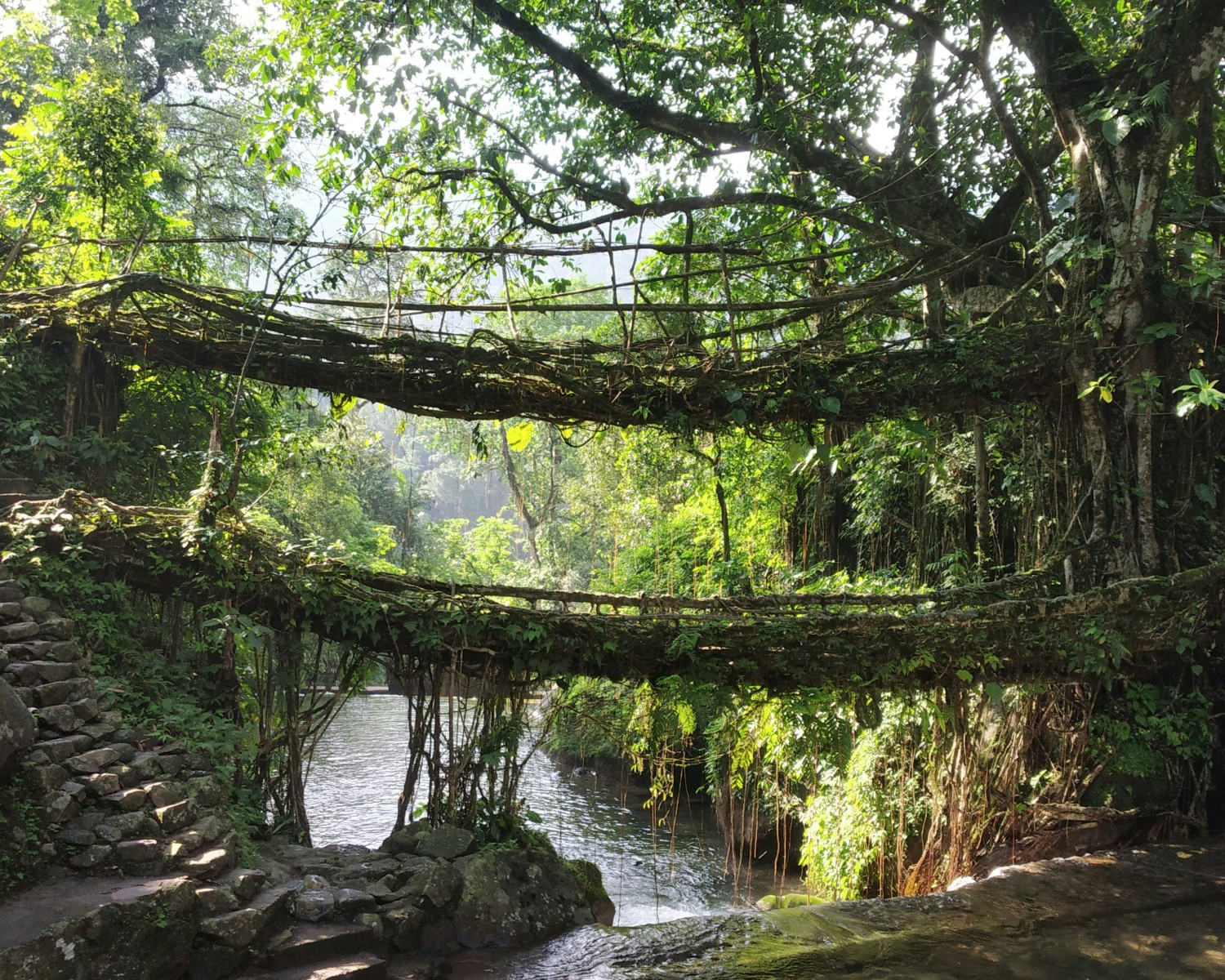
Meghalaya's living root bridges are the state's signature sight: bridges grown rather than built, by training the aerial roots of the rubber fig across a stream over decades until they knit into a living structure strong enough to walk on. Some are more than a century old, and they get stronger with age rather than weaker.
The correction worth making
The living root bridges are not UNESCO World Heritage Sites. They were added to India's UNESCO Tentative List in 2022, which means they are formally nominated candidates for future inscription — not inscribed sites. A great many travel pages, including operator listings, describe them as World Heritage Sites. They are not, at least not yet, and a page that gets this right is more trustworthy than one that does not.
The Double-Decker at Nongriat — be honest with yourself
The famous double-decker root bridge is at Nongriat, a village below Cherrapunji, and reaching it is a serious walk that a great many visitors underestimate.
The trek | Roughly 3,000 steps down from Tyrna to Nongriat, and the same 3,000 steps back up |
Time | About 1.5 to 2 hours down, and 2 to 3 hours back up depending on fitness |
The hard part | The return. It is a continuous stone staircase climb with very little flat ground, in humidity |
Also on the route | Two long steel suspension bridges over the gorge, which some people find harder than the steps |
Who should not attempt it | Anyone with knee or heart problems, low fitness, or young children who cannot walk it themselves |
Staying overnight | Basic guesthouses at Nongriat let you split the climb across two days and see the bridge without day-trippers. Genuinely the better option if you can spare the night |
We would rather talk you out of it than sell it to you. This is the single most common source of disappointment on a Meghalaya trip — a family books it expecting a walk to a viewpoint and finds a 6,000-step round trip. If the trek is not right for your group, there are single-decker root bridges near Mawlynnong and Riwai that involve a short, flat walk and give you the same experience of standing on a living bridge.
If you do want Nongriat, we arrange a local guide, build it as a full day, and tell you honestly what your group is taking on.
Ask about the root bridge trek →
Mawsynram or Cherrapunji — which is the wettest place on earth?
Mawsynram. It records the highest average annual rainfall of any inhabited place on earth, and holds the record ahead of Cherrapunji. Cherrapunji — properly called Sohra — is the more famous name and holds records for the highest rainfall in a single month and a single year, which is why the confusion persists.
The two villages sit about 15 kilometres apart in the same range, so this is a distinction rather than a choice. Most itineraries visit Cherrapunji because it has the waterfalls, the caves and the accommodation. Mawsynram is quieter, has the Mawjymbuin Cave with its naturally formed stalagmite, and can be added as a half day from Sohra.
We mention it because most operator pages state that Cherrapunji is the wettest place on earth, which has not been accurate for some time.
Best time to visit Meghalaya
October to April for a standard trip. Meghalaya's seasons are more consequential here than in most Indian states, because the state receives some of the heaviest rainfall on earth and that changes what is accessible.
Period | What it's like | Verdict |
October – November | Post-monsoon. Waterfalls still strong, hills green, skies clearing, comfortable temperatures | The best overall window, and the peak. Book 8–10 weeks ahead |
December – February | Cool and dry, with the clearest skies of the year. The Umngot River at Dawki is at its most transparent. Cold in the hills at night | Best for photography and for the Dawki clear-water shot |
March – April | Warming, still dry, fewer visitors than autumn, softer rates | Underrated. Good trekking conditions before the rain arrives |
June – September | Monsoon. Very heavy rain, waterfalls at maximum flow, landscape at its most dramatic. Roads and treks affected | A genuine option for some travellers — see below |
Should you visit Meghalaya in the monsoon?
Most pages treat this as a straightforward no. It is not — it depends entirely on what kind of traveller you are.
Reasons to go. The waterfalls are the reason people come to Meghalaya, and in the monsoon they are at full flow — Nohkalikai and the Seven Sisters are a different order of spectacle from the modest streams they become in April. The root bridges are at their greenest, the cloud and mist through the Khasi Hills are extraordinary, rates are at their lowest, and there are almost no other visitors.
Reasons not to. Road conditions deteriorate and landslides occur. The Nongriat trek becomes slippery and is sometimes closed. The Umngot at Dawki runs high and brown rather than transparent. Views disappear into cloud for days at a time. Kaziranga is closed. And you will get properly wet — this is not the intermittent rain of a Kerala monsoon.
Our honest steer: if this is your first Meghalaya trip, or you are travelling with children or older parents, come between October and April. If you are a photographer, or an experienced traveller who genuinely wants the drama and does not mind losing a day to weather, the monsoon is a legitimate and underrated choice — and we will plan it with buffer days built in.
Festivals worth planning around
Meghalaya's tribal festivals are among the most rewarding cultural events in India and are almost entirely unmarketed to domestic tourists.
• Nongkrem Dance — a five-day Khasi thanksgiving festival held at Smit, near Shillong, usually in November. Ceremonial dress, traditional music and a genuine religious occasion rather than a performance for visitors
• Wangala — the Garo harvest festival, typically in November, marked by the hundred-drums performance in the Garo Hills
• Shad Suk Mynsiem — the Khasi spring thanksgiving dance in Shillong, usually in April
Dates shift each year and are set locally, so confirm before booking around one. Tell us if you want to attend and we will check the current year's dates and arrange it properly — these are community occasions and visitors are welcome when they come with the right approach.
Where to go in Meghalaya
Shillong
The state capital, at about 1,500 metres, and the base for most trips. Ward's Lake and the Lady Hydari Park in the centre, Shillong Peak for the valley view, Elephant Falls just outside, the Don Bosco Museum of Indigenous Cultures for genuinely good context on the Northeast's tribal communities, and Police Bazaar for shopping and eating. Shillong has a strong live music culture — Meghalaya's rock and gospel scene is well known across India — and it is worth an evening.
Cherrapunji (Sohra)
Two hours south of Shillong on a plateau above the Bangladesh plains. Nohkalikai Falls, India's tallest plunge waterfall; the Seven Sisters Falls; Mawsmai and Arwah caves; Thangkharang Park; and the Eco Park viewpoint looking out over Bangladesh. The base for the Nongriat root bridge trek.
Dawki and the Umngot River
On the Bangladesh border, about three hours from Shillong. The Umngot's boat ride is the draw — in the dry months the water is clear enough that the riverbed is visible several metres down and boats appear suspended. Also here: the Indo-Bangladesh border crossing at Tamabil, and Shnongpdeng upstream, which is quieter and better for camping and kayaking.
Mawlynnong
Widely described as Asia's cleanest village, and while the title's provenance is debated, the village genuinely is immaculate — bamboo dustbins on every path, communal cleaning, and a rule against littering that residents enforce themselves. A bamboo skywalk gives a view over the plains into Bangladesh, and the Riwai single-decker living root bridge is a short walk away, on flat ground.
Mawphlang Sacred Forest
A grove about an hour from Shillong protected for centuries by Khasi religious practice, where nothing may be taken out — not a stone, not a leaf. The result is an old-growth forest of moss, orchids and rhododendron that feels entirely unlike the managed woodland around it. Go with a local guide, who will explain the monoliths and the practices that preserved it.
Laitlum Canyons
An escarpment about 45 minutes from Shillong looking down into a vast system of green gorges. Best in the late afternoon, and prone to disappearing entirely into cloud, which is part of its appeal. Increasingly the most photographed view in the state.
Mawsynram
The wettest inhabited place on earth, about an hour and a half from Shillong. Quieter and less developed than Sohra, with the Mawjymbuin Cave and its naturally formed Shiva-lingam stalagmite. A good half-day addition for travellers who want the record rather than the crowds.
Understanding Khasi and Garo culture
Meghalaya is home to three main indigenous communities — the Khasi and Jaintia in the east and centre, and the Garo in the west — and all three are matrilineal, which is unusual anywhere in the world and central to how the state works.
What matrilineal actually means here
Descent, family name and property pass through the mother's line. In Khasi tradition the youngest daughter, Ka Khadduh, inherits the ancestral property and takes on responsibility for caring for elderly parents and unmarried siblings — a custodial role as much as an inheritance. Children take the mother's clan name. Husbands traditionally move into the wife's household.
It is worth being precise about this, because it is frequently misdescribed. Matrilineal is not the same as matriarchal: political authority in Khasi society has traditionally sat with men. The village council, the Dorbar Shnong, and the traditional chieftaincies have historically been male institutions. Both things are true at once, and the tension between them is actively discussed within Meghalaya today.
Things you will see and hear
• Jainsem — the traditional Khasi women's dress, two lengths of cloth draped from the shoulders. You will see it worn everyday, not only at festivals
• Duitara — the traditional Khasi four-stringed instrument, played with a wooden plectrum
• Monoliths — standing stones across the Khasi Hills, raised to commemorate ancestors. The clusters at Mawphlang and Nartiang are the most impressive
• Tirot Sing — the Khasi chief who led the resistance against British expansion in the Anglo-Khasi War of 1829 to 1833. He is a significant figure in Meghalaya and his name comes up often
• Khasi is widely spoken, alongside Garo in the west and English almost everywhere. Hindi is understood in Shillong but less so in villages
Meghalaya is also predominantly Christian, largely Presbyterian and Catholic, alongside the surviving indigenous Niam Khasi faith. Sunday is genuinely observed — many shops close, and some tourist services run reduced hours. Worth knowing when planning a Sunday in Shillong.
What's included in a Bayard Meghalaya package
Included
• Hotel stays in Shillong, Cherrapunji, Mawlynnong, Dawki or Kaziranga as per your route
• Daily breakfast, with more meals on longer and premium itineraries
• Vehicle with driver for the entire circuit, including the Guwahati airport transfers and the Guwahati–Shillong leg
• Sightseeing and entry tickets — waterfalls, caves, parks, Mawlynnong village and skywalk
• Umngot River boat ride at Dawki
• Local guides where they genuinely add something — Mawphlang Sacred Forest and the Nongriat trek
• Kaziranga jeep safaris on Assam-combined itineraries, booked in advance
• On-trip assistance and local coordination
Not included
• Flights to and from Guwahati, unless you have asked us to bundle them
• Optional activities — kayaking and camping at Shnongpdeng, zip-lining, additional safaris
• Porter or assistance charges on the Nongriat trek, if required
• Travel insurance
• Personal expenses: shopping, tips, minibar and laundry
Who Meghalaya suits best
Meghalaya for photographers
Probably the most photogenic state in India, and the one where a guide who knows the light matters most. Laitlum in the late afternoon, Nohkalikai after rain, Dawki's clear water in December, the root bridges in soft light, and cloud moving through the Khasi Hills at almost any hour. October to December and the monsoon are the two strongest windows for very different reasons.
Meghalaya for honeymoons
A rising offbeat honeymoon destination and a genuinely good one — quiet, green, and entirely unlike the standard Indian honeymoon circuit. A six-day Shillong, Cherrapunji, Dawki and Mawlynnong route with better hotels and private transfers suits couples well. Travel October to April, and consider a Nongriat overnight if you both walk comfortably.
Meghalaya for families
Works well with two caveats. The drives are long and winding, so build in fewer bases rather than more; and the Nongriat trek is not suitable for young children or grandparents, though the flat Riwai root bridge near Mawlynnong absolutely is. Everything else — waterfalls, caves, the Dawki boat, Mawlynnong's skywalk — suits mixed ages.
Meghalaya for senior travellers
Better than its reputation. Mawlynnong, Dawki, the Shillong sights and most of the Cherrapunji viewpoints involve short, easy walking. What needs planning around is the driving — long stretches on winding hill roads — and the caves, several of which involve stooping and uneven ground. We build shorter driving days and substitute where needed.
Practical things worth knowing
Permits and ID
Indian citizens need no permit for Meghalaya. It is a domestic state and a valid government photo ID — Aadhaar, voter ID, driving licence or passport — is sufficient. There is no Inner Line Permit requirement, which distinguishes Meghalaya from Arunachal Pradesh, Nagaland, Mizoram and Manipur, where Indian citizens do need one.
If your itinerary extends into Arunachal or Nagaland, permits are required and we arrange them. Foreign nationals do not need an ILP for Meghalaya but should confirm current registration requirements before travelling.
Roads, driving and daylight
Meghalaya's roads are generally decent but continuously winding, and they are considerably slower than the distances suggest. We drive in daylight wherever possible — hill roads with fog, no street lighting and occasional livestock are not worth doing after dark. This is why we push back on itineraries with late-afternoon arrivals into Guwahati.
Motion sickness is common on the Shillong–Dawki and Shillong–Cherrapunji stretches. If anyone in your group is prone to it, take medication before setting off rather than during.
Money and connectivity
Cards and UPI work in Shillong and larger establishments. Carry cash for village entry fees, boatmen, guides and small shops — ATMs are sparse outside Shillong and Cherrapunji. Mobile coverage is good in Shillong and along the main roads, and thins considerably at Nongriat, in the Garo Hills and in parts of the Dawki area.
Food
Khasi cuisine is distinctive and worth trying — jadoh, rice cooked with meat and spices; doh khleh, a shredded pork salad; tungrymbai, fermented soybean; and pork in many forms. Shillong also has strong Bengali, Assamese, North Indian and Chinese options, plus a good café culture.
Vegetarian travellers should plan ahead. Local Khasi and Garo cooking is heavily meat-based, and while vegetarian food is readily available in Shillong, it is harder in Cherrapunji, Mawlynnong and village stops. Tell us at booking and we will build the route around places that can cater properly.
Responsible travel
Mawlynnong's cleanliness is maintained by its residents, and the living root bridges are load-bearing village infrastructure rather than attractions built for visitors. Carry your rubbish out, ask before photographing people, respect the rules at Mawphlang, and pay local guides properly. Meghalaya's tourism is still small enough that how visitors behave genuinely matters.
What to pack
Rain protection whatever the month — this is Meghalaya. Layers, since Shillong at 1,500 metres is cold in the evenings from November to February. Proper walking shoes with grip if you are doing Nongriat or any of the caves; the steps are wet and worn. A dry bag for cameras and phones, particularly for the Dawki boat and monsoon travel.
Why book Meghalaya with Bayard Vacations
Almost every Meghalaya operator is based in Guwahati or Shillong and writes for travellers from Delhi and Kolkata. We are a Bengaluru operator, and we plan Meghalaya around the journey South Indian travellers actually make.
• The full journey planned, not just the ground portion. Your city to Guwahati to Shillong, with realistic total travel time and flight timings chosen so you arrive in daylight.
• Honest trek difficulty. We will tell you that Nongriat is 3,000 steps down and 3,000 back up, and suggest the flat Riwai bridge if that is wrong for your group.
• Seasonal honesty. The Dawki clear-water shot needs winter. Kaziranga closes in monsoon. Monsoon Meghalaya is genuinely good for some travellers and wrong for others, and we will say which you are.
• Fewer bases, not more. Meghalaya's drives are long, and a route with four hotels in five days is a week spent in a car.
• Assam combinations positioned properly — Kaziranga is in Assam, the safari season is limited, and both need booking ahead.
• Local guides where they add something — Mawphlang and Nongriat in particular are transformed by someone who knows them.
Talk to a Meghalaya specialist →
Meghalaya package FAQs
How much does a Meghalaya tour package cost?
A 4–6 day Meghalaya package costs ₹17,000 to ₹30,000 per person land-only, or ₹28,000 to ₹48,000 per person including flights from South India. Assam and Meghalaya itineraries with Kaziranga run ₹30,000 to ₹70,000 and above per person.
How do I get to Meghalaya from Bangalore?
Fly to Guwahati, which takes about three hours nonstop from Bengaluru with several daily departures, then drive around three to three and a half hours to Shillong. Realistic door-to-door time is eight to nine hours, so take a morning flight.
Are there direct flights to Guwahati from South India?
Yes. Bengaluru is the best served, at about three hours with multiple daily flights across carriers. Hyderabad has direct service at around two hours forty-five minutes, and Chennai has direct flights with fewer daily options. Schedules change seasonally.
Do Indians need a permit for Meghalaya?
No. Meghalaya is a domestic Indian state and a valid government photo ID is all you need — no Inner Line Permit, no passport, no visa. Permits are required for Arunachal Pradesh, Nagaland, Mizoram and Manipur, but not for Meghalaya.
How many days do you need for Meghalaya?
Four days covers Shillong and Cherrapunji. Five to six days adds Dawki and Mawlynnong, which is the route most people should book. Seven to nine days if you are combining with Assam and Kaziranga. The Garo Hills need their own separate trip.
What is the best time to visit Meghalaya?
October to April. October and November are the peak, with strong waterfalls and clearing skies. December to February gives the clearest skies and the most transparent water at Dawki. March and April are quieter with good trekking conditions.
Is Meghalaya worth visiting in the monsoon?
It depends on the traveller. Waterfalls are at maximum flow, the landscape is at its most dramatic and rates are lowest. But roads deteriorate, treks close, views vanish into cloud, the Umngot runs brown and Kaziranga shuts. Good for photographers, wrong for a first family trip.
How hard is the Double-Decker living root bridge trek?
Hard. Roughly 3,000 steps down from Tyrna to Nongriat and 3,000 back up, taking about two hours down and two to three hours up. The return climb is continuous stone stairs in humidity. Not suitable for anyone with knee or heart problems, or young children.
Is there an easier living root bridge to visit?
Yes. The single-decker root bridge at Riwai, near Mawlynnong, involves a short walk on flat ground and gives you the same experience of standing on a living bridge. It is the right choice for families, senior travellers and anyone not up to the Nongriat climb.
Are the living root bridges a UNESCO World Heritage Site?
Not yet. They were added to India's UNESCO Tentative List in 2022, which makes them formally nominated candidates for future inscription rather than inscribed sites. Many travel pages describe them as World Heritage Sites, which is incorrect.
Which is the wettest place on earth, Cherrapunji or Mawsynram?
Mawsynram holds the record for the highest average annual rainfall of any inhabited place on earth. Cherrapunji, properly called Sohra, is more famous and holds single-month and single-year records. The two villages are about 15 kilometres apart.
When is the Umngot River at Dawki clearest?
The famous transparent water is a dry-season phenomenon, at its best from roughly November to March. During and after the monsoon the river runs high and silty — boats still operate, but the water is green-brown rather than glass-clear.
Can I combine Meghalaya with Kaziranga?
Yes, and it is our highest-value Northeast itinerary. Kaziranga is in Assam, about four and a half to five hours from Guwahati, and the route works over seven to nine days. Note that Kaziranga's safari season runs roughly November to April and closes during the monsoon.
Is Meghalaya safe and family-friendly?
Yes. Meghalaya is one of the safer states in India for travellers, with a strong local hospitality culture and widely spoken English. Plan around the long winding drives, avoid night driving on hill roads, and skip the Nongriat trek with young children.
Is vegetarian food available in Meghalaya?
In Shillong, yes, with a good range of options. It is harder in Cherrapunji, Mawlynnong and village stops, where local Khasi and Garo cooking is heavily meat-based. Tell us at booking and we will build the route around places that can cater properly.
What is Meghalaya famous for?
Living root bridges grown from the aerial roots of rubber fig trees, the waterfalls and caves around Cherrapunji, the clear water of the Umngot River at Dawki, Mawlynnong village, Mawsynram as the wettest inhabited place on earth, and the matrilineal Khasi and Garo cultures.
What is included in a Bayard Meghalaya package?
Hotels, daily breakfast, a vehicle with driver for the whole circuit including the Guwahati transfers, sightseeing and entry tickets, the Dawki boat ride, local guides at Mawphlang and Nongriat, and on-trip support. Flights to Guwahati are quoted separately.
How far in advance should I book a Meghalaya trip?
Eight to ten weeks for most dates. Twelve weeks for October and November, which is the peak season, and for any itinerary including Kaziranga, where safari slots and lodges sell out first. Flights from South India also rise sharply in the autumn peak.
Planning a Meghalaya trip? Tell us your city, your dates and who is travelling. We will send back a costed itinerary paced for the drives Meghalaya actually involves — and an honest view on whether the root bridge trek is right for your group.
Enquire now · WhatsApp · Call
meghalaya Packages


Signature Collections
Handpicked signatures and top-rated escapes in meghalaya

We Are Bayard Vacations
Not just another travel company. We're dreamweavers, adventure architects, and memory makers.
Explore
Now Featuring
Thailand

Highlight
Meet Bayard Buddy – Advanced AI Chatbot for Everyday Help
Experience 01
Riwai Living Root Bridge and forest surroundings
Explore HighlightExplore
Experience 02
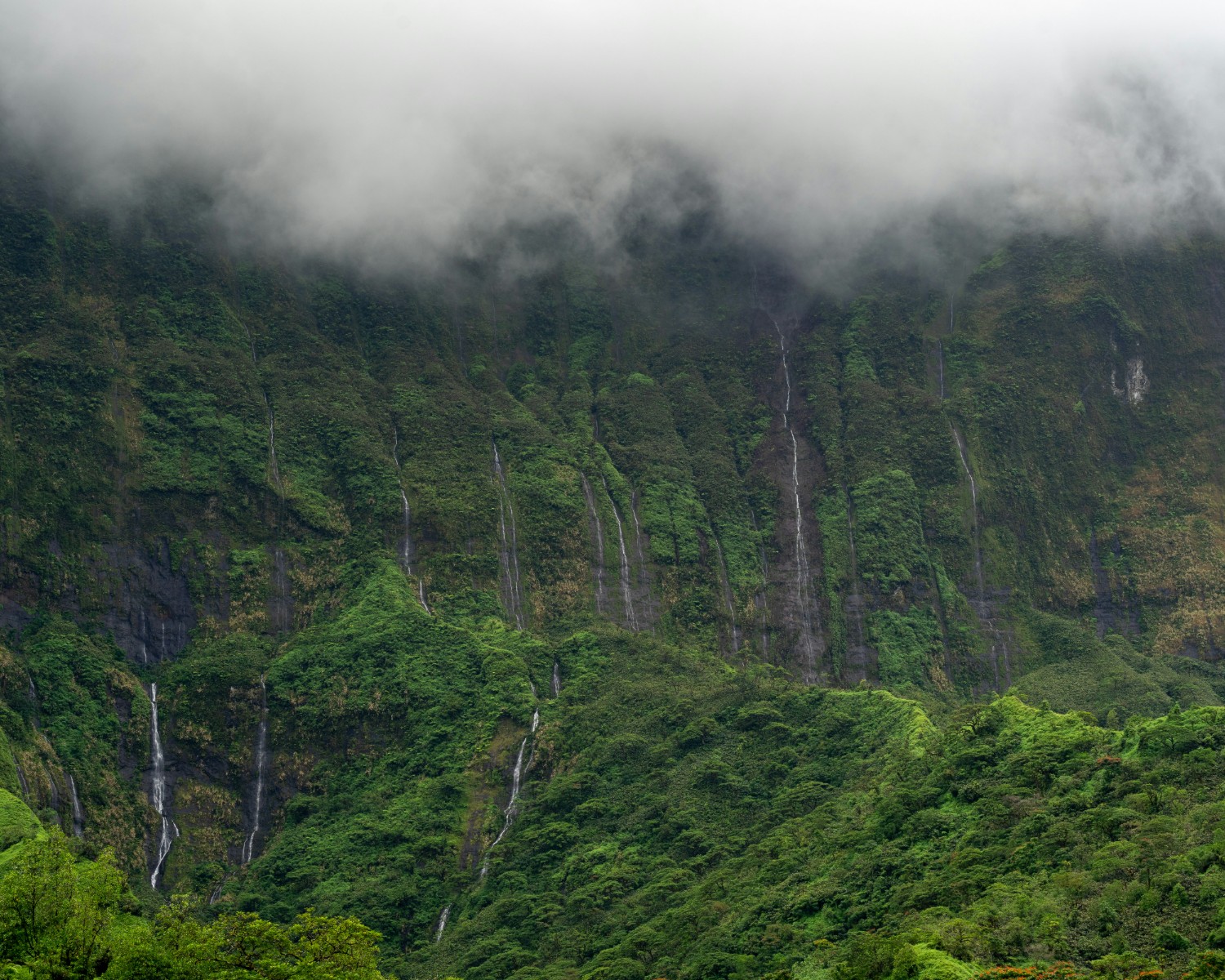
Seven Sisters Falls cascading through monsoon mist
Explore HighlightExplore

Experience 03
Shillong cityscape and Ward's Lake serene environment
Explore HighlightExplore
Experience 04
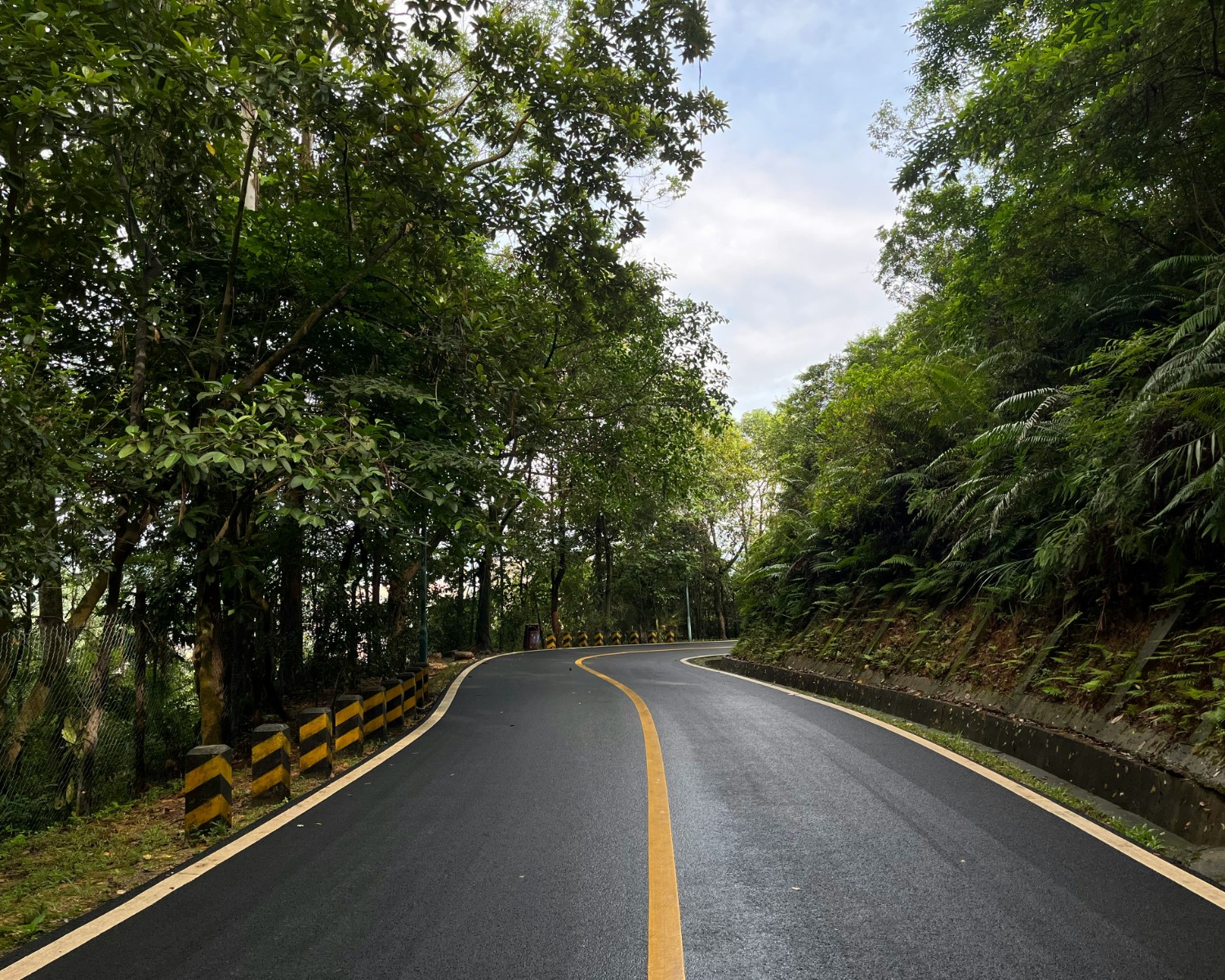
Mawlynnong village pristine streets and community spaces
Explore HighlightExplore
Experience 05
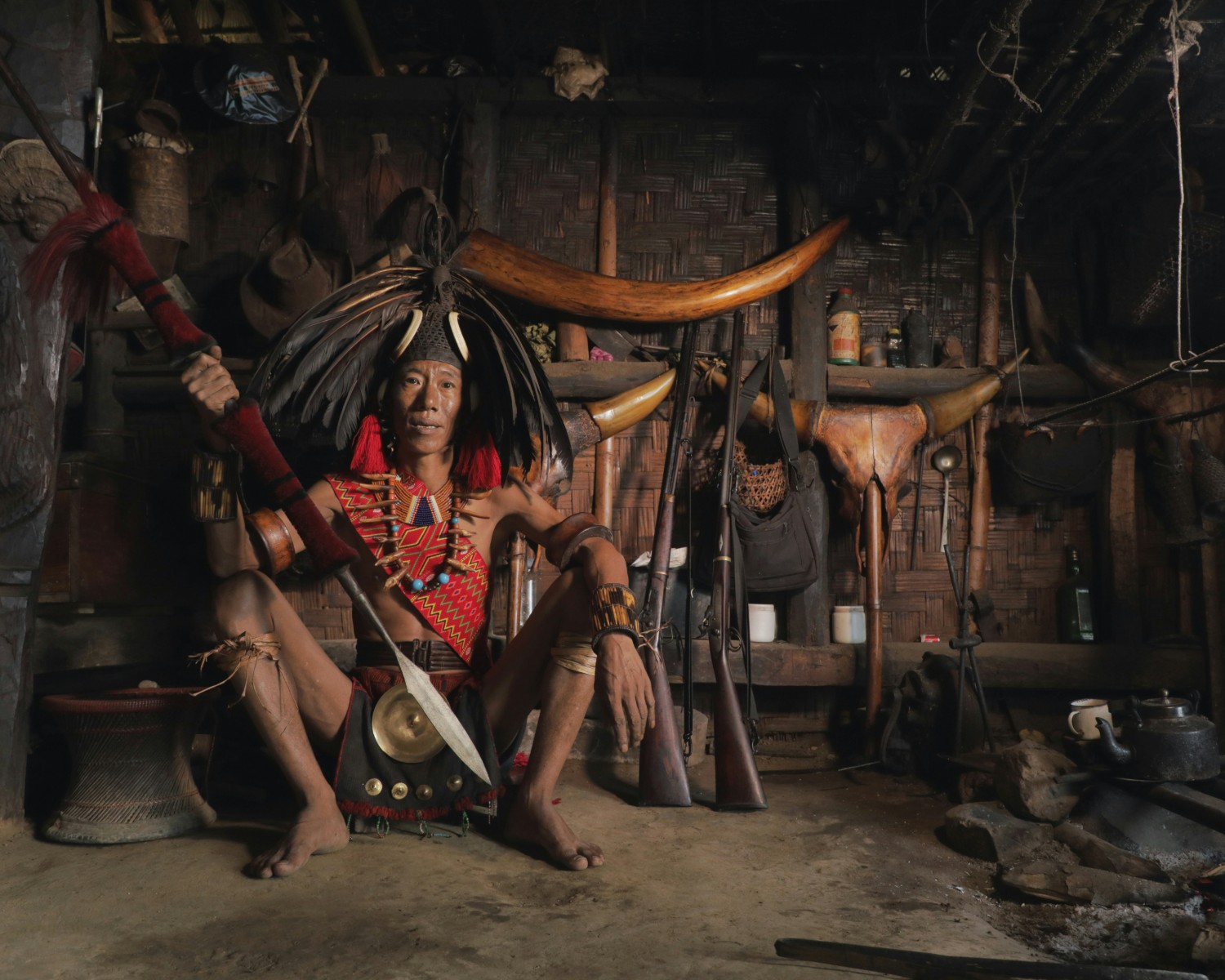
Khasi traditional village life and community gathering
Explore HighlightExplore
Image Unavailable
Experience 06
Explore HighlightExplore
KNOWLEDGE HUB
Things to Know in Tips for meghalaya
Meghalaya, the "Abode of Clouds," is a premier northeast India tourism destination. Steeped in tribal culture, the state preserves the unique matriarchal society of the Khasi, Garo, and Jaintia hills, where indigenous traditions and sacred groves flourish alongside colonial history. Meghalaya offers an unparalleled blend of adventure travel, eco-tourism, and rich heritage sites for modern travelers.
From Ancient Tribal Kingdoms to Modern Northeast Gem
Meghalaya, the "Abode of Clouds," is a premier northeast India tourism destination. Steeped in tribal culture, the state preserves the unique matriarchal society of the Khasi, Garo, and Jaintia hills, where indigenous traditions and sacred groves flourish alongside colonial history. Meghalaya offers an unparalleled blend of adventure travel, eco-tourism, and rich heritage sites for modern travelers.
| Pre-Classical & Ancient Tribal Period (3000 BC–15th Century)
Khasi, Garo, Jaintia tribal kingdoms governed Meghalaya. Decentralized clan-based systems; village elders (Khyndaittnia) governed. Sacred groves (law kyntang) protected forests; environmental stewardship integral. Trade with Tibet, China (tea, silk routes). Oral traditions preserved history; no written records early period. Agriculture (rice, millet) foundational; animistic spirituality dominant.
| Medieval Period & Kingdom Consolidation (15th–18th Centuries)
Khasi Kingdom emerged (Khasi Hills); Garo Kingdom consolidated territory. Matriarchal clan systems solidified (Khasis); lineage through mother (Ka Khyndai = mother). Stone megaliths erected (commemorative structures); archaeological significance. Trade networks expanded; merchant communities developed. Hindu, Islamic influences limited; indigenous traditions dominated. Sacred sites: Um Kynrem (ancestral shrine), Khasi temples.
| British Colonial Period (1824–1947)
British East India Company conquered region (Treaty of Yandaboo, 1826). Shillong established as hill station (1864); British summer refuge. Colonial administration imposed; disrupted traditional governance. Christian missionaries arrived; conversion campaigns started. Education introduced (colonial schools, colleges). Tea plantations established (marginal). Infrastructure: railways, roads developed. Indigenous resistance movements (Khasi uprising 1829–1833 Siang War against British).
| Independence & Statehood (1947–1972)
India independence (1947); Meghalaya union territory within Assam. Movement for separate statehood strong. Meghalaya State achieved (1972); capital Shillong. Administrative reorganization; tribal culture preservation recognized. Education expansion; modern infrastructure development. Matriarchal traditions legally protected (clan inheritance laws). Sacred groves conservation initiated.
| Modern Era—Eco-Tourism & Cultural Revival (1972–Present)
Meghalaya transformed into Northeast adventure destination (last 30 years): trekking, waterfall tourism, caving, rock climbing. Eco-tourism emphasis; sustainable practices promoted. Sacred groves (UNESCO Biosphere consideration); biodiversity hotspot. Cultural revival: tribal festivals, traditional crafts celebrated. Khasi language revival efforts; indigenous governance respected. Modern infrastructure; education centers; tech emerging.
Wettest Place
Cherrapunji
10,794mm annual rainfall; world record area
Living Root Bridges
500+
Ancient Khasi engineering; UNESCO heritage
Sacred Groves
1,500+
Community-protected biodiversity hotspots
Capital
Shillong
Queen of the Hills; cultural center
Travel Stories & Tips
Get inspired for your next adventure to meghalaya

Guest Stories
H
Hemanth R
4 months agoExceptional Service and Stunning Views! I just returned from a trip to Kerala curated by Bayard Vacations, and I'm still thinking about the views. Unlike generic packages, Dhanushree from Bayard took the time to tailor the itinerary to my preferences. Every hotel and houseboat was chosen for its...
P
Prajwal Raikar
5 months agoWe went to Dubai, and Bayard Vacations made our entire trip truly joyful and memorable. Adarsh from Bayard Vacations was extremely helpful in arranging the yacht and managing a few issues promptly, which made our vacation smooth and stress-free.
M
Muthahir
5 months agoWe had a wonderful vacation in Dubai, all thanks to Bayard Vacations. From planning to execution, everything was smooth and well-organized. The itinerary was perfectly balanced, the accommodations were comfortable, and all arrangements were completely hassle-free. A special thanks to Mr. Adarsh for...
S
Spoorthy Venkatesh
5 months agoWe had an amazing time in Dubai with Bayard Vacation. Adarsh, our destination specialist, explained everything super smoothly and stayed in touch with us the whole time, which made the trip feel really easy and well organized. The team was great with the transport arrangements too. The drivers were...
B
Bakasura Brahmana
5 months agoBest iternary prepared by them. The best travel agency I suggest
H
Harsha Vardhan Attuluri
5 months agoWe recently went on a trip to Coorg and Wayanad with Bayard Vacations, and the experience was seamless. We opted for a private package, and all the arrangements were excellent. The communication was clear throughout the process. A special thanks to our agents, Rahul and Sowmya, who handled the plann...
A
Abhishek Satapathy
5 months agoWe had a wonderful vacation in Thailand thanks to the...
S
Shilpa Wartak
5 months agoWe booked our Hampi and Badami tour with Bayard Vacation and had an absolutely amazing experience! Everything was perfectly planned and very smooth from start to finish. The hotel location was excellent and close to all major places, and the drive was super comfortable. The whole trip was completely...
A
Abhilash Cr
5 months agoWe recently completed a 4-5 day Andaman trip with Bayard Vacation, and overall it was a very pleasant and well-organized experience. From the planning stage to the end of the journey, the team especially team of Rahul, Dhanushree, was supportive and responsive, making the trip smooth and stress-free.

Medha Devatraj
a month agoLoved our trip to Kerala(Munnar, Thekkady, Alleppey, Varkala and Kovalam) with Bayard Vacations. They've tailored our package and made adjustments according to our itinerary. Agents Sooraj and Dhanushree were the ones who planned and executed our trip so well🙌🙌. They were very polite and friendly. The vehicle arranged was a comfortable and spacious one for our family of 9. We were apprehensive about the tour but returned with beautiful and lifelong memories🫶🫶. A trip with Bayard Vacations is value for money ♥️♥️.

Sriram appalla
a month agoI recently took a 5N/6D trip to Kerala with Bayyard Vacation, and it turned out to be a lovely experience. Even before the trip began, the Bayyard team, especially Sooraj, helped me with every little detail and was super quick with his responses. Our assigned driver, Jbin Alex, was incredibly humble, kind, and supportive throughout the journey. I’d strongly recommend him if you’re planning a Kerala trip, and I’d definitely suggest choosing Bayyard Vacation for your travels. There was a small miss where one of the complimentary items mentioned in the itinerary couldn’t be fulfilled, but aside from that, everything went smoothly. Overall, I’d rate Bayyard Vacation a solid 4.5/5.

jothees waran
2 weeks agoManasa, sincere thanks for curating such an elegant and seamless Thailand experience. Every aspect of the journey was impeccably planned—from punctual transfers and smooth pickups to a perfectly balanced itinerary. The attention to detail, premium coordination, and effortless execution truly elevated the trip. Everything flowed with precision, allowing us to relax and enjoy each moment without a single concern. Your professionalism and commitment to excellence were evident throughout. Bayard Vacations delivers not just a trip, but a truly luxurious and memorable travel experience. Highly recommended.

Kaustubh Rastogi
3 weeks agoWe recently traveled to Malaysia and had a fantastic experience with Bayard Vacations. Their quick responses and excellent service made the entire planning process smooth and stress-free. Balaji’s recommendations were absolutely on point and perfectly matched our preferences. His attention to detail and prompt support truly made a difference. Highly satisfied with the overall experience and would definitely choose Bayard Vacations again for future trips. Highly recommended! ⭐⭐⭐⭐⭐

Manu Manu
in the last weekThe trip was very beautiful. We have experienced many places and we got chance to have the package. They guided us very safely and assured as everything that you need and food was also good and was in care of everything was fantastic trip. We went to Thailand and Bangkok, and we did alKaiser show Quarter Island and we explored a lot in the Water, also like paragliding Jaki riding And there was a dinner cruise in Bangkok. Also was very nice. Totally we really appreciate for the trip and we will like to do more.
Authentic Experiences
Read All Reviews Join 25,000+ happy travelers who explored meghalaya with us.
You Might Also Like
Discover more incredible destinations and experiences tailored for you
Why Choose Bayard Vacations?
100%
Secure Booking
8+
Years Experience
25K+
Happy Travelers
24/7
Support Available
Best Price
Guaranteed
Personalized
Customized Trips
Expert
Local Guides
100+
Destinations Covered