
karnataka
Karnataka
Hampi's ancient temples meet coffee plantations, offering a perfect best places to visit in Karnataka experience. Vijayanagar ruins, pristine beaches, and cultural splendor span India's southwestern jewel.
19+
packages
20k
Travelers
4.9
Rating
Many +
Activities
Explore
Destination Overview
About Karnataka
Land of Temples, Coffee Plantations, Tiger Reserves & Ancient Ruins—Experience South India's Soul in One State.
Karnataka, India's silicon valley, traces its heritage back 2,000+ years through multiple dynasties and empires. The Vijayanagara Empire (1336–1646) established Hampi as one of South India's greatest cities, documented in UNESCO World Heritage ruins. The region transitioned through Hindu kingdoms, Islamic sultanates, and finally British colonial rule before emerging as independent India's industrial and IT powerhouse. Today, Karnataka balances Mughal-era temples, Hindu heritage sites with cutting-edge technology, making it India's most diverse state. Domestic tourism exploded 124% in 2022 to 18.24 crore visitors, continuing growth to record 30.46 crore (2024)—India's top 3 states. International visitors: 4.85 lakh (2024), up 18.6% from prior year but below pre-pandemic 6.09 lakh peak.
Best TimeOct - Mar
CurrencyINR (₹)
ClimateTropical/Temperate
Time ZoneUTC+5:30 (IST)
LanguageKannada/English
VisaDomestic/Foreign E-Visa
CapitalBengaluru
Population67.4M
Best Time
Oct - Mar
Currency
INR (₹)
Climate
Tropical/Temperate
Time Zone
UTC+5:30 (IST)
Language
Kannada/English
Visa
Domestic/Foreign E-Visa
Capital
Bengaluru
Population
67.4M
Why Choose karnataka?
Hampi – UNESCO World Heritage City of Ruins
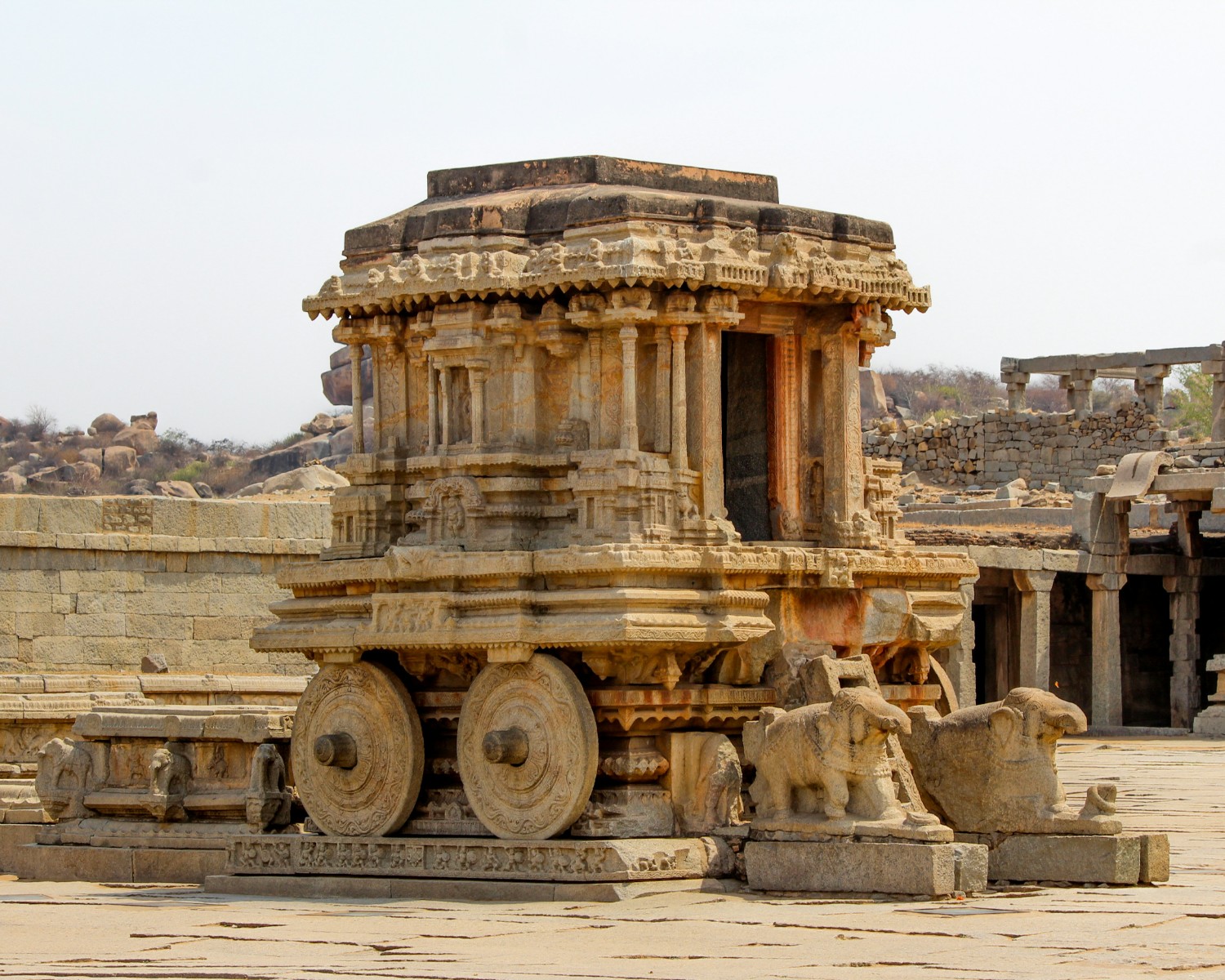
Hampi, capital of Vijayanagara Empire (14th–16th century), represents pinnacle of South Indian architectural achievement. Scattered across 4,200 acres: 500+ temples, royal palaces, marketplace remains, astronomical structures. Must-see: Virupaksha Temple (functioning 1,400 years; oldest temple in India), Vittala Temple's iconic stone chariot & musical pillars, Hemakuta Hill temples. Dramatic boulder-strewn landscape, Tungabhadra River setting creates otherworldly atmosphere. UNESCO recognition (1986) catalyzed preservation efforts. Today: trekking, heritage walks, photography paradise.
Mysore Palace – Royal Architectural Splendor
Mysore Palace epitomizes Vijayanagara-Marathi architectural fusion: Indo-Islamic-Gothic blend. Built 1897 (British era), still royal residence (Wodeyar family). 44,788 foreign visitors FY2024; second-highest decade footfall. Palace highlights: ornate durbar hall (Diwali light extravaganza), sandalwood doors, intricate tilework, chamber museum. Mysore Dasara (September–October): 10-day festival; palace illuminated with 97,000+ lights; cultural performances, processions. Bengaluru-Mysore highway easily accessible: 140 km, 2.5 hrs drive.
Coorg – "Scotland of India" Coffee Paradise
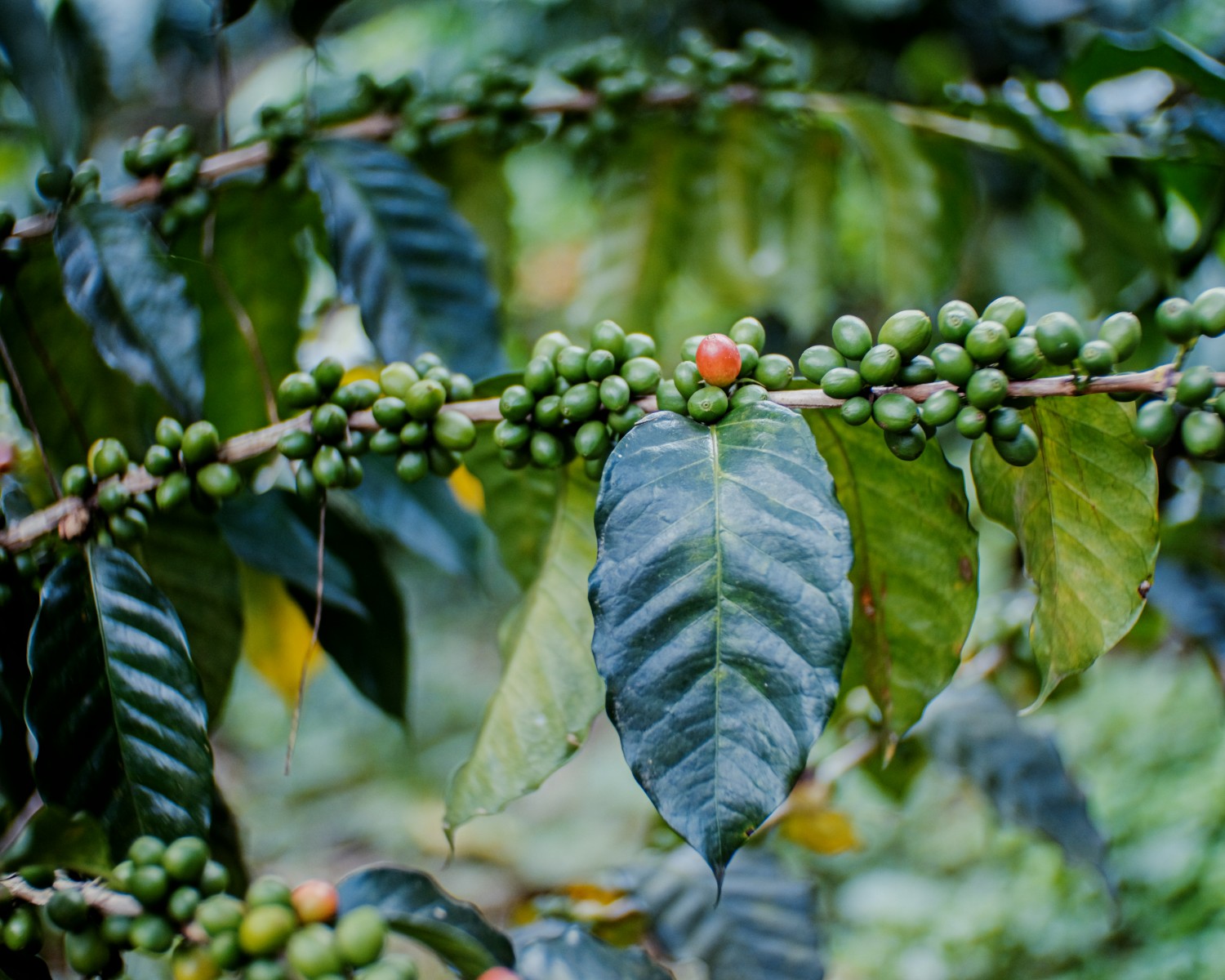
Coorg (Kodagu district): lush green misty hills, sprawling coffee plantations, exotic spice gardens. Elevation 3,000–6,000 ft; cool microclimate year-round. Abbey Falls, Iruppu Falls cascade through verdant forests. Dubare Elephant Camp: interact rescued elephants. Peak season (Oct-Feb): perfect weather for plantation walks, homestay experiences, trekking Pushpagiri Peak. Coffee tasting tours, Ayurvedic treatments in hill stations. Road trip from Bengaluru: 5 hrs through picturesque routes.
Bengaluru – Ancient Temple City Meets Tech Metropolis
Bengaluru (formerly Bangalore), founded 1537 by Kempe Gowda, uniquely blends spiritual heritage (Iskcon Temple, Kempegowda Fort, Tipu Sultan's Palace) with ultra-modern tech campuses. Lalbagh Botanical Garden (1760s): 240 acres, rare plants, glasshouse architecture. Colonial vestiges: St. Mark's Cathedral, Vidhana Soudha (legislature). Contemporary: Cubbon Park (art galleries, museums), NGOs, startup ecosystem. Food capital: filter coffee culture, South Indian cuisine (Vidyarthi Bhavan legend-dosa, Brahmins' Coffee), cosmopolitan dining. Gateway to Karnataka tourism: international airport, metro system (Namma Metro: 3 lines operational; 66 stations).
Must-Experience Attractions
Hampi—UNESCO World Heritage Ruins (Virupaksha Temple, Vittala Temple)
Mysore Palace & Mysore Dasara Festival
Coorg Coffee Plantations & Homestays
Gokarna & Udupi Beaches
Hoysala Temples (Belur, Halebidu, Somanathapura)
Western Ghats Trekking & Waterfalls
Karnataka Tour Packages
A Karnataka tour package costs roughly ₹10,000 to ₹22,000 per person for a 3–5 day land-only trip, or ₹22,000 to ₹40,000 per person for a 6–8 day heritage or wildlife circuit. Most travellers pick one of four routes: Bengaluru–Mysuru–Coorg for a first visit or a long weekend, the Hampi–Badami–Pattadakal heritage loop, a Bandipur and Kabini wildlife trip, or the Hoysala temple trail through Belur, Halebidu and Somanathapura.
Karnataka is large, and that is the thing most itineraries get wrong. Hampi is nearly seven hours from Bengaluru; Gokarna is nine. A route that looks tidy on a map can mean four consecutive travel days. Bayard Vacations is based in Bengaluru, we run these roads constantly, and we publish the real drive times below so you can see them before you book.
Karnataka trip at a glance
Ideal duration | 2–3 days for a Mysuru or Coorg weekend; 4–5 days for Bengaluru–Mysuru–Coorg; 5–7 days for the Hampi heritage loop; 7–10 days for wildlife, coast and heritage combined |
Cost | ₹10,000–₹22,000 per person land-only for 3–5 days; ₹22,000–₹40,000 for 6–8 days |
Best season | October to March. Hampi and the northern heritage circuit are genuinely uncomfortable from March to June |
Entry | Domestic. A valid government photo ID is all you need |
Main airports | Bengaluru (BLR), Mangaluru (IXE), Hubballi (HBX), Mysuru (MYQ), Belagavi (IXG) |
UNESCO sites | Four: Hampi, Pattadakal, the Sacred Ensembles of the Hoysalas, and the Western Ghats |
Best for | Heritage travellers, wildlife enthusiasts, families, couples, weekend travellers from Bengaluru |
Worth knowing | NH-766 through Bandipur closes to traffic 9pm–6am. Wildlife safaris must be booked in advance and sell out |
Karnataka's four UNESCO World Heritage Sites
Karnataka has more UNESCO World Heritage listings than any other South Indian state, and one of them is recent enough that most travel pages have not caught up.
Site | Inscribed | What it is |
Group of Monuments at Hampi | 1986 | The capital of the Vijayanagara Empire — temples, bazaars, royal enclosures and boulder landscape spread across roughly 40 square kilometres |
Group of Monuments at Pattadakal | 1987 | A Chalukyan complex of nine temples where northern Nagara and southern Dravida architectural styles were developed side by side |
Western Ghats | 2012 | A serial natural site. Karnataka's component clusters include the Kudremukh and Talacauvery areas |
Sacred Ensembles of the Hoysalas | 2023 | Three 12th–13th century Hoysala temples: Chennakeshava at Belur, Hoysaleswara at Halebidu, and Keshava at Somanathapura |
The Hoysala inscription is the one worth knowing about. The Sacred Ensembles of the Hoysalas were added to the World Heritage List on 18 September 2023, becoming India's 42nd site. A great many Karnataka itineraries — including plenty still being sold — describe the state as having two UNESCO sites and omit Belur, Halebidu and Somanathapura entirely.
That matters practically, not just as trivia. The Hoysala temples are among the most extraordinary carved stone anywhere in India, they sit within easy reach of both Bengaluru and Mysuru, and they remain far less crowded than Hampi. We have built them their own itinerary below.
How long the drives actually take
Karnataka covers close to two hundred thousand square kilometers, and its attractions sit at opposite ends of it. These are realistic door-to-door times including a break — not optimistic map estimates.
Route | Distance | Realistic driving time |
Bengaluru → Mysuru | About 145 km | 2 to 2.5 hours on the expressway |
Mysuru → Madikeri (Coorg) | About 120 km | 3 hours |
Bengaluru → Madikeri (Coorg) | About 265 km | 5.5 to 6 hours |
Bengaluru → Belur and Halebidu | About 220 km | 4 hours |
Mysuru → Somanathapura | About 35 km | 1 hour |
Mysuru → Bandipur | About 80 km | 2 hours |
Mysuru → Kabini (Nagarhole) | About 80 km | 2 to 2.5 hours |
Bengaluru → Hampi | About 340 km | 6.5 to 7 hours |
Hampi → Badami | About 140 km | 3 hours |
Badami → Pattadakal | About 22 km | 40 minutes |
Bengaluru → Chikkamagaluru | About 250 km | 5 hours |
Bengaluru → Gokarna | About 480 km | 9 hours |
Hampi → Gokarna | About 300 km | 7 hours |
The Bengaluru–Mysuru expressway changed one of these substantially. The road opened in 2023 and cut the journey from around three and a half hours to roughly two. Plenty of itineraries and blog posts still quote the old timing, which is why some operators still sell Mysuru as a full travel day when it is comfortably a morning.
What this means for planning. Karnataka does not work as a single loop. Treat it as three separate regions — the southern circuit around Bengaluru, Mysuru, Coorg and the wildlife parks; the northern heritage belt around Hampi, Badami and Pattadakal; and the coast from Gokarna down to Mangaluru. Combining all three in under ten days means spending most of it in a car.
Karnataka tour package cost
A 3–5 day Karnataka package costs ₹10,000 to ₹22,000 per person land-only, and a 6–8 day heritage or wildlife circuit ₹22,000 to ₹40,000 per person. Premium wildlife lodges and boutique heritage stays run higher.
Component | Typical range (per person) | What moves the number |
Flight or train to Bengaluru | ₹4,000 – ₹15,000 | Free if you already live in Bengaluru, which is a large share of Karnataka trips. Trains to Hubballi and Hosapete serve the northern circuit directly |
Hotels, 3–5 nights | ₹6,000 – ₹25,000 | Coorg homestays and Hampi guesthouses are inexpensive. Kabini wildlife lodges are the most expensive accommodation in the state |
Car with driver | ₹10,000 – ₹25,000 per vehicle | Quoted per vehicle for the whole circuit, not per person — so it drops sharply for a family of four. Northern circuit distances push this higher |
Wildlife safaris | ₹1,000 – ₹6,000 per safari | Forest department bus at the low end, shared jeep in the middle, private jeep or a lodge's own vehicle at the top |
Entry tickets and guides | ₹1,500 – ₹4,000 | Karnataka's monument fees are low. A licensed guide at Hampi is the exception and is money genuinely well spent |
Meals beyond breakfast | ₹500 – ₹1,200 per day | Darshinis and local restaurants at the low end, resort dining at the high end. Karnataka is inexpensive to eat in |
The car is the line people misread, exactly as in Kerala. It is quoted per vehicle for the entire circuit rather than per person per day, which is why Karnataka often works out substantially cheaper per head for a family of four than the per-person headline suggests.
Karnataka package price by travel style
Travel style | Duration | What's included | Per person, land only |
Budget | 3–4 days | 3-star hotels, breakfast, car with driver, Mysuru and Coorg sightseeing | ₹10,000 – ₹15,000 |
Budget–mid | 4–5 days | 3–4 star mix, some meals, palace and plantation inclusions, one safari | ₹15,000 – ₹22,000 |
Mid-range | 5–7 days | 4-star hotels, Hampi with a licensed guide, jeep safaris, more inclusions | ₹22,000 – ₹35,000 |
Premium / wildlife | 7–10 days | Boutique heritage stays, Kabini or Bandipur lodges, private safaris, private transfers | ₹40,000 – ₹70,000+ |
Prices are indicative for 2026 and move with season. Mysuru during Dasara and Coorg over long weekends cost noticeably more. We quote hotels, the car, safaris and guides as separate lines so you can see which choice is driving the number.
Get a fixed price for your dates →
Popular Karnataka itineraries
Five routes cover almost every Karnataka booking we handle. All start from Bengaluru unless you are flying into Mangaluru for the coast or taking a train to Hosapete for Hampi.
Bengaluru, Mysuru and Coorg — 3 to 5 Days
From ₹10,000 per person (land only) · Best for first-time visitors and long weekends
The classic southern circuit: a city, a palace and a plantation, all within a few hours of each other.
• Day 1 — Bengaluru: Bangalore Palace, Vidhana Soudha, Tipu Sultan's Summer Palace, Lalbagh Botanical Garden and Cubbon Park
• Day 2 — Drive to Mysuru (about 2 hours on the expressway). Mysore Palace, Chamundi Hills and the Nandi statue, St Philomena's Cathedral, Mysore Zoo and Devaraja Market
• Day 3 — Drive to Madikeri (about 3 hours). Coffee plantation walk, Abbey Falls, Raja's Seat for sunset
• Day 4 — Coorg: Dubare Elephant Camp, Talacauvery, Namdroling Monastery at Bylakuppe, and a plantation stay
• Day 5 — Return to Bengaluru (about 6 hours) or continue to Mysuru for departure
Time the Mysore Palace illumination. The palace is lit with close to a hundred thousand bulbs on Sunday evenings and on public holidays, typically for around 45 minutes after dark. It is the single best sight in the itinerary and it does not happen on an ordinary Tuesday — we build the route around it wherever your dates allow.
Mysore Zoo is in Mysuru, not Bengaluru — worth stating because a surprising number of itineraries list it under the Bengaluru day. It is one of India's oldest and best-run zoos and deserves a couple of hours on the Mysuru day.
Hampi, Badami and Pattadakal — 5 to 7 Days
From ₹22,000 per person (land only) · Best for heritage travellers
Karnataka's northern heritage belt, and one of the great archaeological landscapes anywhere in India. This route needs its own trip — do not try to bolt it onto a Mysuru itinerary.
• Days 1–3, Hampi — the Virupaksha Temple, the Vittala Temple with its stone chariot and musical pillars, the Elephant Stables, the Lotus Mahal, Hazara Rama Temple, the Queen's Bath, and sunset from Matanga or Hemakuta Hill
• Day 4 — Drive to Badami (about 3 hours). The four Chalukyan rock-cut cave temples carved into the sandstone cliff above Agastya Lake, plus the Bhutanatha temples
• Day 5 — Pattadakal, 22 kilometres away, and Aihole a further 35 — often called the cradle of Indian temple architecture, with more than a hundred temples across the site
• Days 6–7 — Return via Hubballi or Hosapete, or continue west to Gokarna for the coast
Hampi needs a guide. The site covers roughly forty square kilometres of ruins with almost no interpretive signage. Without someone explaining what you are looking at, it is a very hot walk among impressive rocks. A licensed guide is the highest-return expense on this entire itinerary and we include one.
On the Virupaksha Temple: it is frequently described as the oldest functioning temple in India. What can be said with confidence is that it has been in continuous worship since at least the 7th century, which makes it one of the oldest continuously functioning temples in the country — a claim that stands up where the superlative does not.
Getting there: Hosapete Junction is the nearest railhead, about 13 kilometres from Hampi, with overnight trains from Bengaluru. Taking the night train and waking up there saves you a full day of driving in each direction.
Plan a Hampi heritage trip →
The Hoysala Temple Trail — 3 to 4 Days
From ₹15,000 per person (land only) · Best for architecture and sculpture enthusiasts
Karnataka's newest UNESCO listing, inscribed in 2023, and still remarkably uncrowded. If you have seen Hampi and want something denser and more detailed, this is the trip.
• Day 1 — Bengaluru to Shravanabelagola: the 17-metre monolithic statue of Bahubali at the top of 600-odd steps, then on to Hassan
• Day 2 — Belur's Chennakeshava Temple and Halebidu's Hoysaleswara Temple — soapstone carved to a level of detail that has to be seen rather than described
• Day 3 — Somanathapura's Keshava Temple, the most complete of the three, on the way to Mysuru
• Day 4 — Mysuru sightseeing and return to Bengaluru
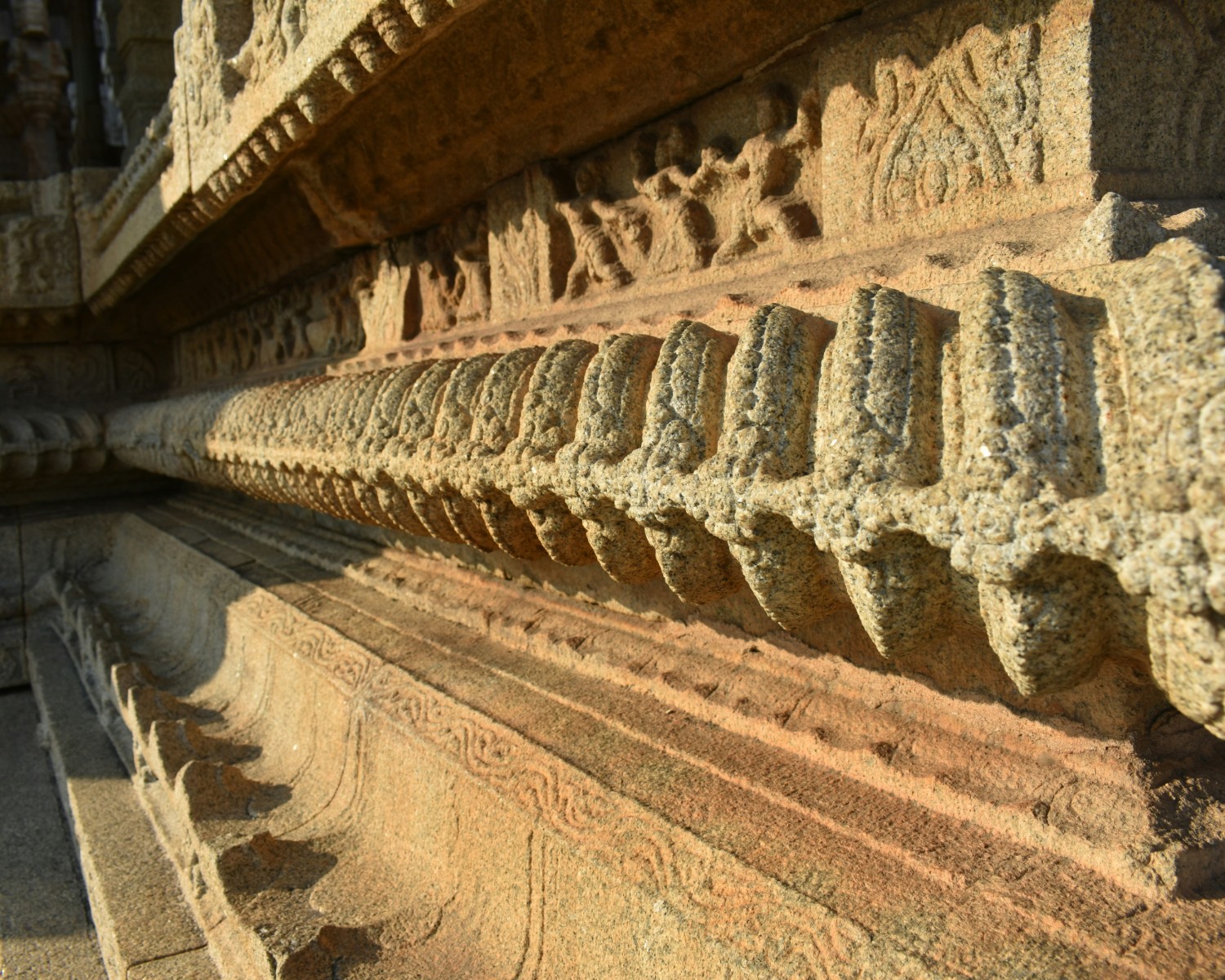
Why these temples are different. The Hoysalas worked in soapstone, which is soft enough to carve like wood and hardens over time. The result is sculptural density found almost nowhere else — friezes of elephants, horsemen and mythological scenes wrapped around the entire exterior, and individual figures with jewellery and fingernails picked out. Many carvings are signed by the sculptor, which is extremely unusual in Indian temple art.
This route combines naturally with the Mysuru and Coorg circuit into a 6–7 day trip, since Somanathapura is only an hour from Mysuru.
Plan a Hoysala temple trip →
Wildlife — Bandipur, Nagarhole and Kabini — 3 to 5 Days
From ₹18,000 per person (land only) · Best for wildlife enthusiasts and photographers
Karnataka holds one of India's largest tiger populations, and the Bandipur–Nagarhole complex is among the best places in the country to see wild elephants in numbers.
• Bandipur Tiger Reserve — tiger, leopard, gaur, dhole and very large elephant herds. Forest department bus and jeep safaris, morning and afternoon
• Nagarhole (Rajiv Gandhi National Park) — denser forest, excellent for leopard. Two access points: the Kabini side in the south and the Kutta side in the north
• Kabini — the backwaters side of Nagarhole, with boat safaris alongside jeep safaris and the state's best wildlife lodges. Famous for the black panther
• BR Hills (Biligiriranga) — quieter, less visited, and a good third night if you want to avoid the crowds
Safaris must be booked ahead and they do sell out. Karnataka Forest Department safaris run in fixed morning and afternoon slots with a limited number of vehicles per slot. Weekends, long weekends and the summer holidays are booked out well in advance. Turning up hoping to buy a ticket on the day is how people end up with no safari at all.
Best months are March to May, counterintuitively. The forest is dry, water sources shrink, and animals concentrate around the remaining waterholes — sightings are markedly better than in the green months even though the heat is less pleasant.
Plan a Karnataka wildlife trip →
Coastal Karnataka — Gokarna, Murudeshwar and Udupi — 4 to 6 Days
From ₹18,000 per person (land only) · Best for beach travellers and pilgrims
Karnataka's coastline is quieter and less developed than Goa's, with temple towns, beaches reached on foot, and some of the best food in South India.
• Gokarna — the Mahabaleshwar Temple, and the beach sequence south of town: Kudle, Om, Half Moon and Paradise, connected by a cliff walk
• Murudeshwar — the second-tallest Shiva statue in the world on a headland above the Arabian Sea, with a 20-storey temple gopura
• Udupi — the Sri Krishna Matha, one of the most important Madhva Vaishnava centres, and the birthplace of Udupi cuisine
• Malpe and St Mary's Island — a boat ride to the columnar basalt formations, and the best beach on this stretch
Getting there matters here. Gokarna is nine hours by road from Bengaluru, which makes it a poor add-on to a Mysuru trip. Either take the Konkan Railway, or fly into Mangaluru and work northwards. The coast pairs far better with Hampi — seven hours across — than with the southern circuit.
Plan a coastal Karnataka trip →
Karnataka packages from your city
Bengaluru is the entry point for most Karnataka itineraries, with Mangaluru serving the coast and Hubballi or Hosapete the northern heritage belt.
From | Approx. flight time to Bengaluru |
Chennai | About 1 hour |
Hyderabad | About 1 hour 15 minutes |
Kochi | About 1 hour 15 minutes |
Mumbai | About 1 hour 45 minutes |
Pune | About 1 hour 30 minutes |
Delhi | About 2 hours 45 minutes |
Kolkata | About 2 hours 30 minutes |
Ahmedabad | About 2 hours |
Karnataka weekend trips from Bangalore
Bayard is based in Bengaluru, and a large share of what we plan in Karnataka is not a holiday at all — it is a two or three-day escape from the city. These are the routes that actually work in a weekend, with realistic timings rather than aspirational ones.
Destination | Drive from Bengaluru | Nights needed |
Mysuru | 2 to 2.5 hours | 1 night is enough; 2 if you want Srirangapatna and Somanathapura |
Coorg (Madikeri) | 5.5 to 6 hours | 2 nights minimum. A one-night Coorg trip is twelve hours of driving for one afternoon |
Chikkamagaluru | 5 hours | 2 nights. Coffee estates, Mullayanagiri and Baba Budangiri |
Belur and Halebidu | 4 hours | 1 to 2 nights, best combined with Chikkamagaluru |
Bandipur or Kabini | 5.5 to 6 hours | 2 nights, to get both a morning and an evening safari |
Sakleshpur | 4 hours | 2 nights. Quieter than Coorg and cheaper |
Hampi | 6.5 to 7 hours | Not a weekend. Take the overnight train and give it 3 days |
One honest steer on Coorg. It is the most-booked weekend destination from Bengaluru and it is often a mistake as a single night — six hours out, six hours back, for one afternoon of plantation walking. Two nights transforms it. If you only have one night free, Mysuru or Sakleshpur will give you more holiday for the same driving.
Karnataka packages from other Indian cities
Chennai, Hyderabad and Kochi are all around an hour to Bengaluru with high frequency and low fares, which makes even a 3 days Karnataka trip practical. Mumbai and Pune are under two hours. From Delhi, Kolkata and Ahmedabad, allow a minimum of five days — the flight cost and time do not justify a short trip, and the heritage circuit or a wildlife itinerary makes better use of the journey.
For the northern heritage belt specifically, flying into Hubballi rather than Bengaluru saves several hours of driving each way, and there are direct trains to Hosapete from Bengaluru, Hyderabad and Goa.
Who Karnataka suits best
Karnataka for heritage travellers
Few Indian states offer this much in one place: Vijayanagara at Hampi, Chalukyan architecture at Badami, Aihole and Pattadakal, Hoysala sculpture at Belur, Halebidu and Somanathapura, Jain monolithic art at Shravanabelagola, and Wodeyar royal architecture at Mysuru. Four UNESCO listings, spanning roughly a thousand years of building. A proper heritage trip needs eight to ten days and a licensed guide at the major sites.
Karnataka for wildlife and photography
The Bandipur–Nagarhole–Kabini complex is among India's most reliable places for elephant and gaur, with strong tiger and leopard numbers and the well-known Kabini black panther. Kabini's lodges are the best wildlife accommodation in South India. Book safaris and lodges together and well in advance — both sell out, particularly March to May, which is the best sighting season.
Karnataka for families
Works well and cheaply. Mysore Palace, the zoo, Dubare Elephant Camp, a safari and a coffee plantation cover a four or five-day trip with short drives between them, and Karnataka's food suits children. Skip the northern heritage circuit with young children — Hampi is hot, walking-heavy and unshaded, and small children find it hard going.
Karnataka for weekend travellers from Bengaluru
The state's biggest single market, and the one most poorly served by generic package listings. What matters here is honest driving times and knowing how many nights a destination actually needs. See the weekend table above.
Best time to visit Karnataka
October to March for most of the state. But Karnataka spans dry northern plains, hill country and a monsoon coastline, and the right month depends heavily on which of them you are visiting.
Region | Best months | What to know |
Northern heritage — Hampi, Badami, Pattadakal | November – February | Hampi regularly exceeds 40°C from March to June and the site is exposed with almost no shade. This is the one region where the wrong month genuinely ruins the trip |
Southern circuit — Bengaluru, Mysuru | October – March | Pleasant year-round by Indian standards. Bengaluru's climate is the reason people move there |
Hill country — Coorg, Chikkamagaluru, Sakleshpur | October – March, plus June–August for monsoon travellers | Green and dramatic in monsoon but with landslide and road-closure risk. October to February gives the best balance |
Wildlife — Bandipur, Nagarhole, Kabini | March – May for sightings; October – February for comfort | Dry months concentrate animals at waterholes and sightings improve markedly. Parks may close sections during heavy monsoon |
Coast — Gokarna, Udupi, Murudeshwar | November – February | Heavy monsoon June to September, with rough seas and suspended boat services |
Dates that will change your trip
• Mysuru Dasara, over ten days in September or October, is Karnataka's biggest festival — the palace fully illuminated every night, and the Jamboo Savari elephant procession on the final day. Spectacular, and Mysuru hotels book out months ahead at multiples of normal rates. Plan around it deliberately either way
• Mysore Palace illumination runs on Sunday evenings and public holidays, typically for around 45 minutes after dark. It is the highlight of any Mysuru visit and it does not happen on ordinary weekdays
• Jog Falls only performs from about August to December, when the Sharavathi is in flow. Outside that window it is a largely dry cliff, and travellers arrive in March expecting India's second-highest waterfall
• Coorg and Chikkamagaluru in monsoon are beautiful and genuinely risky. The Western Ghats sections see landslides and road closures in heavy rain, and the region has had serious incidents. We monitor conditions and reroute rather than pressing on
• Long weekends — Karnataka's hill stations are Bengaluru's release valve. Coorg, Chikkamagaluru and Sakleshpur are fully booked and heavily trafficked on every long weekend of the year. Book six to eight weeks ahead or travel midweek
Where to go in Karnataka
Bengaluru
More than an airport to pass through. Bangalore Palace, the Vidhana Soudha, Tipu Sultan's Summer Palace, Lalbagh Botanical Garden and its glasshouse, Cubbon Park, and the Bull Temple at Basavanagudi. Then the parts people actually remember: the city's brewery and restaurant scene, VV Puram food street, and Malleshwaram and Basavanagudi for old Bengaluru.
Mysuru
The Wodeyar capital and Karnataka's most visited city. Mysore Palace — go for the Sunday illumination — Chamundi Hills and the Nandi bull, St Philomena's Cathedral, Devaraja Market, the Mysore Zoo, Brindavan Gardens, and Srirangapatna with Tipu Sultan's Summer Palace and the Ranganathaswamy Temple on the way in from Bengaluru.
Coorg (Kodagu)
Coffee country in the Western Ghats. Madikeri as a base, Abbey Falls and Raja's Seat, Talacauvery at the source of the Kaveri, Dubare Elephant Camp on the river, and the Namdroling Monastery at Bylakuppe — a large Tibetan settlement with a golden temple that surprises most first-time visitors. Plantation homestays are the accommodation to book here rather than hotels.
Hampi
The former capital of the Vijayanagara Empire, spread across a boulder-strewn landscape on the Tungabhadra. The Virupaksha Temple, still in daily worship; the Vittala Temple with its stone chariot and musical pillars; the Elephant Stables and Lotus Mahal in the royal enclosure; Matanga Hill for sunrise; and a coracle ride across the river. Give it three days and a guide.
Badami, Pattadakal and Aihole
The Chalukyan heartland, and where South Indian temple architecture was worked out. Badami's four rock-cut cave temples in the red sandstone cliff above Agastya Lake; Pattadakal's UNESCO complex where northern and southern styles sit side by side; and Aihole's scattered hundred-plus temples, the earliest experiments of the lot.
Belur, Halebidu and Somanathapura
The Sacred Ensembles of the Hoysalas, inscribed by UNESCO in 2023. Soapstone carved to a density of detail unmatched elsewhere in India — friezes of elephants, horses and epic scenes wrapping entire exteriors, star-shaped platforms, and sculptors' signatures on individual figures. Far less crowded than Hampi and, for many visitors, more immediately impressive.
Bandipur, Nagarhole and Kabini
Contiguous protected forest across the Karnataka–Tamil Nadu border, and one of India's most important tiger and elephant landscapes. Bandipur for open forest and elephant herds, Nagarhole for denser cover and leopard, Kabini for boat safaris and the best lodges in South India.
Gokarna, Murudeshwar and Udupi
The coast. Gokarna's Mahabaleshwar Temple and the beach walk south to Kudle, Om, Half Moon and Paradise. Murudeshwar's enormous Shiva statue on its headland. Udupi's Sri Krishna Matha and the cuisine named after it. Quieter and more traditional than Goa, with excellent seafood.
What's included in a Bayard Karnataka package
Included
• Hotel stays in Bengaluru, Mysuru, Coorg, Hampi, Badami, Kabini, Gokarna or Udupi as per your route
• Daily breakfast, with more meals on plantation stays and wildlife lodges
• Air-conditioned car with driver for the entire circuit, including all transfers
• Airport or railway station pickup and drop
• Monument entry tickets — Mysore Palace, Hampi, Badami, Pattadakal, the Hoysala temples
• Licensed guides at Hampi, Badami, Pattadakal and the Hoysala sites
• Wildlife safaris, booked in advance in your chosen category
• Coffee plantation walks and estate visits in Coorg or Chikkamagaluru
• On-trip assistance and local coordination
Not included
• Flights or train fares, unless you have asked us to bundle them
• Camera and video fees at some monuments
• Optional paid activities — private safari vehicles, coracle rides, boat trips, special darshan passes
• Travel insurance
• Personal expenses: shopping, tips, minibar and laundry
Karnataka, Kerala or Tamil Nadu — which should you pick?
The three South Indian states come up together for a five-to-eight-day trip. Here is the honest comparison.
Pick Karnataka if heritage and wildlife are the point. It has more and better-preserved ancient architecture than either neighbour, the strongest wildlife parks in South India, and the best hill-station-to-city ratio. It is also the cheapest of the three per day. The trade-off is distance — Karnataka's attractions are far apart.
Pick Kerala if you want to relax rather than sightsee. Backwaters, Ayurveda, beaches and tea hills in a much more compact state, with a slower rhythm and better-developed tourism infrastructure. Kerala is easier; Karnataka is more interesting.
Pick Tamil Nadu if living temple culture is what draws you. Madurai, Thanjavur, Chidambaram and Rameswaram are working temples on a scale nothing in Karnataka matches, and the Nilgiris add hill stations. Karnataka's temples are largely archaeological; Tamil Nadu's are in daily use.
A good combination: Karnataka's southern circuit pairs naturally with northern Kerala. Bengaluru–Mysuru–Bandipur–Wayanad is a single logical road route across the state border, and it gives you palaces, a safari and a hill station in under a week.
We plan all three, individually and combined. Tell us your dates and interests and we will price them side by side.
Compare Karnataka, Kerala and Tamil Nadu →
Practical things worth knowing
The Bandipur night traffic ban
National Highway 766 through the Bandipur Tiger Reserve is closed to traffic between 9pm and 6am, and has been since a Karnataka High Court order in 2009. The same restriction applies on NH-67 towards Ooty. It exists because more than two hundred animals were killed on those stretches in the years before it, and successive expert committees have recommended keeping it.
It matters if you are driving between Bengaluru or Mysuru and Wayanad, Kozhikode or Ooty. Arriving at the check post after 9pm means either waiting until 6am or taking the Hunsur–Gonikoppal–Kutta–Mananthavady detour, which adds roughly thirty kilometers and over an hour. We plan departure times around it rather than discovering it at the barrier.
Booking wildlife safaris
Karnataka Forest Department safaris at Bandipur and Nagarhole run in fixed morning and afternoon slots with a limited number of vehicles. There are three broad options: the forest department bus, which is cheapest and carries the most people; a shared jeep; or a private jeep. Lodges inside or adjoining the parks — particularly on the Kabini side — run their own vehicles with their own naturalists, which is the best experience and the most expensive.
All of them sell out on weekends, long weekends and through the summer holidays. Book with your accommodation rather than separately, and book both well ahead.
Food
Karnataka's food is regionally distinct in a way most visitors do not expect. Ragi mudde with bassaru in the southern interior, bisi bele bath and Mysore masala dosa around Mysuru and Bengaluru, Udupi and Mangalorean cuisine on the coast including neer dosa, kori rotti and seafood, Kundapur and Coorg pandi curry in the hills, and North Karnataka's jowar rotti, jolada rotti and enne badanekai around Hubballi and Badami — a different cuisine again, and worth seeking out on the heritage circuit.
Vegetarian food is abundant everywhere. Bengaluru's darshini culture — quick, cheap, excellent vegetarian counters — is worth an early morning even if you are only passing through.
Guides, tickets and monument rules
Entry fees at Karnataka's monuments are low, but camera and video fees are charged separately at several sites and are not always included in package pricing. Licensed guides are available at Hampi, Badami, Pattadakal and the Hoysala temples, and at Hampi in particular a guide is the difference between a great day and a hot walk. Most temple sites require shoes to be removed and shoulders and knees covered.
What to pack
Sun protection and a hat for the northern heritage circuit — Hampi and Badami are exposed and the walking is substantial. Something genuinely warm for Coorg, Chikkamagaluru and Bandipur mornings, which drop to single figures in winter and catch out travellers who packed only for South India. Closed walking shoes for the ruins and the plantation walks, and modest clothing for temples.
Why book Karnataka with Bayard Vacations
Karnataka is our home state. We are based in Bengaluru, we drive these routes constantly, and most of what we know about them is the kind of thing that does not appear in package listings.
• Realistic drive times, published upfront. Hampi is seven hours from Bengaluru, Gokarna is nine, and no itinerary that pretends otherwise is going to work.
• Three regions, not one loop. We will tell you that the southern circuit, the northern heritage belt and the coast are separate trips rather than selling you a route that touches all three.
• Safaris booked in advance, in the right category — and we will tell you when the forest department jeep is enough and when a lodge vehicle is worth the difference.
• Licensed guides at the heritage sites, because Hampi without one is forty square kilometers of unexplained ruins.
• Timing built around what actually happens — the Sunday palace illumination, the dry-season safari window, the months Jog Falls is flowing.
• Weekend itineraries priced honestly for Bengaluru travellers, including telling you when a one-night Coorg trip is not worth the driving.
Talk to a Karnataka specialist →
Karnataka package FAQs
How much does a Karnataka tour package cost?
A 3–5 day Karnataka package costs ₹10,000 to ₹22,000 per person land-only, and a 6–8 day heritage or wildlife circuit ₹22,000 to ₹40,000 per person. Premium itineraries with Kabini wildlife lodges and boutique heritage stays run ₹40,000 to ₹70,000 and above.
How many days are enough for Karnataka?
Three to five days covers Bengaluru, Mysuru and Coorg comfortably. Five to seven days for the Hampi, Badami and Pattadakal heritage loop, which needs its own trip. Seven to ten days if you want to combine heritage with wildlife or the coast.
How many UNESCO sites does Karnataka have?
Four. Hampi, inscribed in 1986; Pattadakal, 1987; the Western Ghats as part of a serial natural site, 2012; and the Sacred Ensembles of the Hoysalas at Belur, Halebidu and Somanathapura, inscribed in September 2023. Many itineraries still list only two.
What are the Sacred Ensembles of the Hoysalas?
Three 12th and 13th century Hoysala temples — Chennakeshava at Belur, Hoysaleswara at Halebidu, and Keshava at Somanathapura — inscribed by UNESCO in 2023 as India's 42nd World Heritage Site. Carved in soapstone with extraordinary sculptural detail, and far less crowded than Hampi.
How far is Hampi from Bangalore?
About 340 kilometres and six and a half to seven hours by road. The better option is the overnight train to Hosapete Junction, 13 kilometres from Hampi, which saves you a full day of driving in each direction. Hampi needs three days, not a weekend.
How long is the drive from Bangalore to Mysore?
About two to two and a half hours on the Bengaluru–Mysuru expressway, which opened in 2023 and cut the old journey of three and a half hours. Many older itineraries and blog posts still quote the pre-expressway timing.
What is the best time to visit Hampi?
November to February. Hampi regularly exceeds 40°C from March to June, and the site is exposed with almost no shade across roughly 40 square kilometres of walking. This is the one Karnataka region where the wrong month genuinely spoils the trip.
When is the best time for wildlife safaris in Karnataka?
March to May gives the best sightings. The forest dries out, water sources shrink, and animals concentrate around remaining waterholes. October to February is more comfortable but sightings are less reliable. Parks may restrict sections during heavy monsoon.
Do I need to book Karnataka wildlife safaris in advance?
Yes. Forest department safaris at Bandipur and Nagarhole run in fixed morning and afternoon slots with limited vehicles, and they sell out on weekends, long weekends and through the summer holidays. Book them together with your accommodation, well ahead.
Is the Bandipur road closed at night?
Yes. National Highway 766 through the Bandipur Tiger Reserve is closed to traffic from 9pm to 6am, and has been since 2009. If you arrive after 9pm you wait until morning or take the Hunsur–Gonikoppal–Kutta detour, which adds about 30 kilometres and over an hour.
When is the Mysore Palace illuminated?
On Sunday evenings and public holidays, typically for around 45 minutes after dark, when the palace is lit with close to a hundred thousand bulbs. It does not happen on ordinary weekdays, so it is worth timing your Mysuru night around it.
What is Mysuru Dasara and will it affect my trip?
Karnataka's biggest festival, running ten days in September or October, with the palace illuminated nightly and the Jamboo Savari elephant procession on the final day. Spectacular to witness, but Mysuru hotels book out months ahead at multiples of normal rates.
Is Jog Falls worth visiting?
Only between about August and December, when the Sharavathi river is in flow. Outside that window it reduces to a largely dry cliff face, and travellers who arrive in March expecting India's second-highest waterfall are routinely disappointed.
Is Coorg worth a one-night trip from Bangalore?
Usually not. It is six hours each way, so a single night means twelve hours of driving for one afternoon. Two nights transforms it. If you only have one night, Mysuru or Sakleshpur give you far more holiday for the same driving.
Do I need a guide at Hampi?
Yes, and it is the best money you will spend on the trip. Hampi spreads across roughly 40 square kilometres with almost no interpretive signage. Without a licensed guide it is a hot walk among impressive rocks rather than a visit to an imperial capital.
Can I combine Karnataka with Kerala?
Yes, and it works well. Bengaluru–Mysuru–Bandipur–Wayanad is a single logical road route across the state border, giving you palaces, a safari and a hill station in under a week. Note the Bandipur night traffic ban when planning departure times.
What is included in a Bayard Karnataka package?
Hotels, daily breakfast, an air-conditioned car with driver for the whole circuit, all transfers, monument entry tickets, licensed guides at the heritage sites, pre-booked wildlife safaris, plantation walks and on-trip support. Flights and train fares are quoted separately.
How far in advance should I book a Karnataka trip?
Four to six weeks for most dates. Eight to ten weeks for Mysuru during Dasara, for any long weekend if your route includes Coorg or Chikkamagaluru, and for Kabini wildlife lodges, which are the first thing in the state to sell out.
Planning a Karnataka trip? Tell us your dates, where you are starting from and what you want to see. We are based in Bengaluru and we know these roads — if the route you have in mind involves too much driving, we will say so and suggest a better one.
Enquire now · WhatsApp · Call
karnataka Packages


Signature Collections
Handpicked signatures and top-rated escapes in karnataka

We Are Bayard Vacations
Not just another travel company. We're dreamweavers, adventure architects, and memory makers.
Explore
Now Featuring
Thailand

Highlight
Meet Bayard Buddy – Advanced AI Chatbot for Everyday Help
Experience 01
Hampi's iconic stone chariot and temple ruins
Explore HighlightExplore

Experience 02
Mysore Palace illuminated during Dasara festival
Explore HighlightExplore
Experience 03
Coorg coffee plantations cascading down misty hills
Explore HighlightExplore
Experience 04
Hoysala Temple intricate stone carvings and sculptural details
Explore HighlightExplore
Experience 05
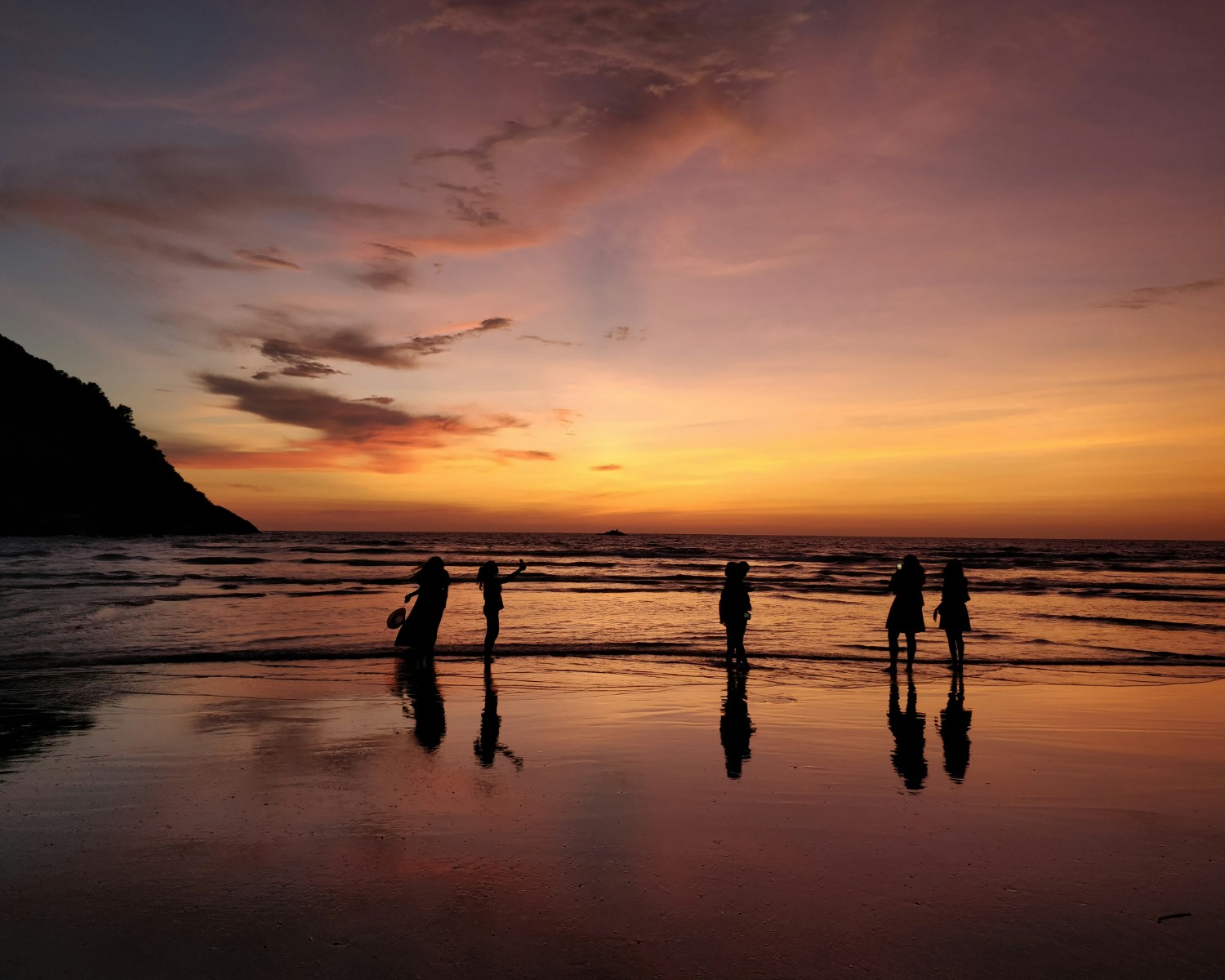
Gokarna's Om Beach shaped like the Sanskrit symbol
Explore HighlightExplore
Experience 06
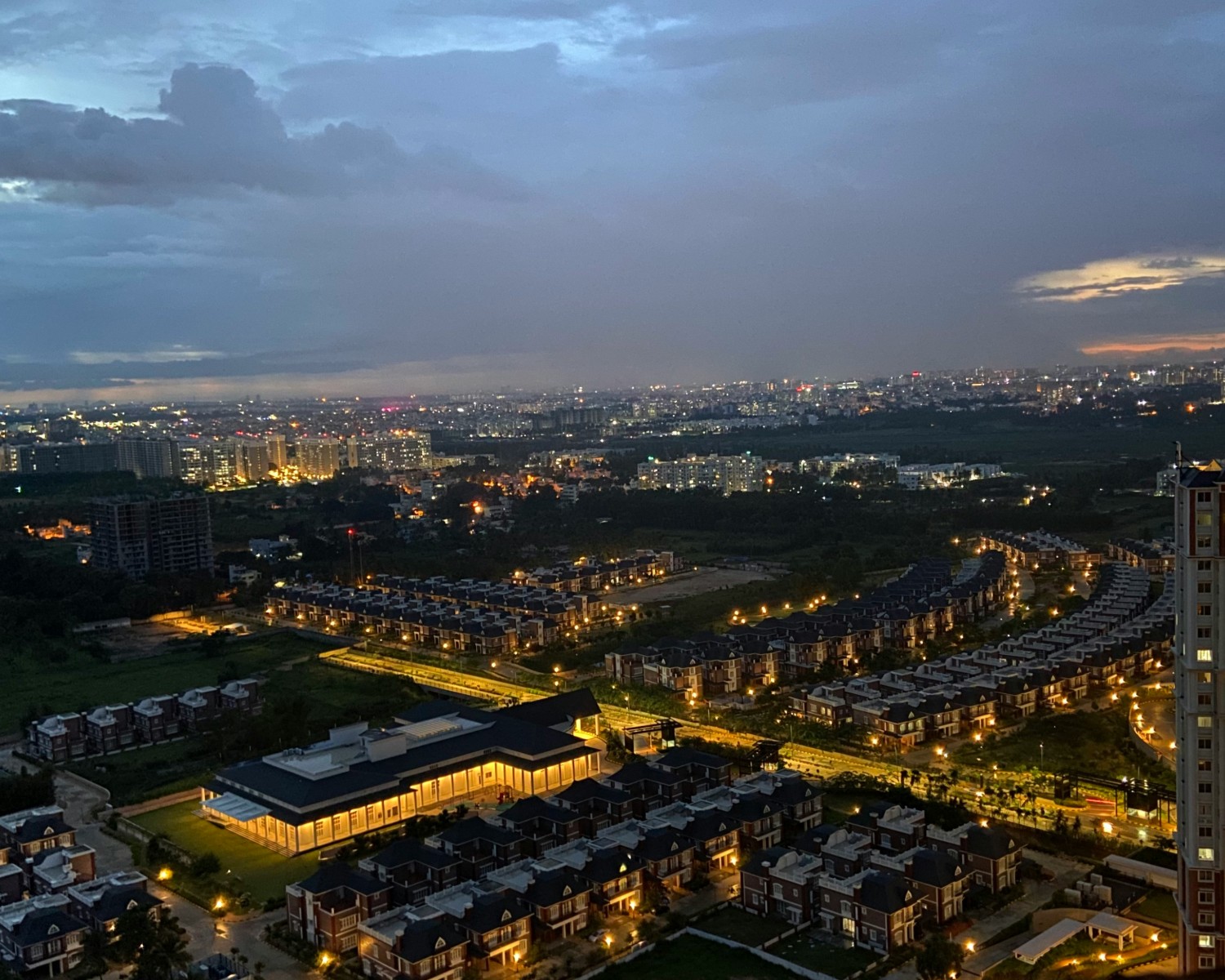
Bengaluru skyline showcasing modern tech architecture
Explore HighlightExplore
KNOWLEDGE HUB
Things to Know in Tips for karnataka
Karnataka, India's silicon valley, traces its heritage back 2,000+ years through multiple dynasties and empires. The Vijayanagara Empire (1336–1646) established Hampi as one of South India's greatest cities, documented in UNESCO World Heritage ruins. The region transitioned through Hindu kingdoms, Islamic sultanates, and finally British colonial rule before emerging as independent India's industrial and IT powerhouse. Today, Karnataka balances Mughal-era temples, Hindu heritage sites with cutting-edge technology, making it India's most diverse state. Domestic tourism exploded 124% in 2022 to 18.24 crore visitors, continuing growth to record 30.46 crore (2024)—India's top 3 states. International visitors: 4.85 lakh (2024), up 18.6% from prior year but below pre-pandemic 6.09 lakh peak.
From Ancient Kingdoms to Modern Innovation Hub
Karnataka, India's silicon valley, traces its heritage back 2,000+ years through multiple dynasties and empires. The Vijayanagara Empire (1336–1646) established Hampi as one of South India's greatest cities, documented in UNESCO World Heritage ruins. The region transitioned through Hindu kingdoms, Islamic sultanates, and finally British colonial rule before emerging as independent India's industrial and IT powerhouse. Today, Karnataka balances Mughal-era temples, Hindu heritage sites with cutting-edge technology, making it India's most diverse state. Domestic tourism exploded 124% in 2022 to 18.24 crore visitors, continuing growth to record 30.46 crore (2024)—India's top 3 states. International visitors: 4.85 lakh (2024), up 18.6% from prior year but below pre-pandemic 6.09 lakh peak.
| Ancient Kingdoms – Hindu & Buddhist Era (3rd Century BCE–7th Century CE)
Karnataka witnessed flourishing of Hindu kingdoms, Buddhist monasteries, and philosophical learning centers. Ashoka's edicts inscribed on rocks throughout Karnataka attest to Buddhist influence. The region served as intellectual hub: Vedic learning, Sanskrit scholarship, and early Jain communities thrived.
| Vijayanagara Empire (1336–1646) – South's Greatest Power
Founded by Harihara I and Bukka Raya I (Sangama Dynasty), Vijayanagara became South India's dominant empire. Hampi (capital city) flourished as cosmopolitan hub rivaling Europe's cities in grandeur. Under Krishnadevaraya (1509–1529, Tuluva Dynasty), empire subjugated nearly all South Indian kingdoms, pushed Deccan sultanates northward. Peak: 16th century—empire controlled trade routes from Arabian Sea to Bay of Bengal. Architecture blended Hindu temples, Islamic influences, Persian administrative systems. Battle of Talikota (1565) catastrophic defeat; empire declined but survived until 1646. Hampi remains UNESCO World Heritage Site: 500+ temples, royal enclosures, bazaars, astronomical instruments.
| Nayak Kingdoms & Mysore Dynasty (1565–1799)
Post-Vijayanagara fragmentation: Mysore emerged as regional power under Wodeyar dynasty. Hyder Ali & Tipu Sultan modernized kingdom (18th century), resisted British expansionism. Mysore became second most powerful Indian state after British East India Company; palace symbolizes this era's architectural splendor.
| British Colonial Rule & Indian Independence (1799–1947)
After British defeated Tipu Sultan (1799), Mysore became British administrative center. Colonial period: railways, plantations (coffee, tea), modern infrastructure introduced. British Raj exploited resources; Indians organized freedom struggle. Karnataka contributed significantly: Keshab Chandra Sen, M. Visvesvaraya pioneered social reform, engineering innovation. 1947 independence; Mysore State integrated into India; 1956 reorganization: Karnataka emerged with linguistic-ethnic boundaries.
| Modern India – Technology Hub & Cultural Repository (1956–Present)
Post-independence Karnataka transformed into IT powerhouse: Bengaluru became Silicon Valley of Asia—home to Infosys, TCS, Wipro (₹10.6 trillion IT export economy). Simultaneously, state preserved heritage: Hampi excavations, temple restoration, classical arts patronage. Today: 67.4M population; Bengaluru ranks world's fastest-growing tech hub; tourism sector balances ancient monuments (Hampi, Mysore Palace) with eco-tourism (Western Ghats, wildlife sanctuaries).
Domestic Visitors 2024
30.46 crore (~305M)
Record high; +7.2% growth YoY; India's top 3 states
International Visitors 2024
4.85 lakh (~485K)
18.6% growth; still below pre-pandemic 6.09 lakh
Hampi UNESCO Site
1986
500+ temples; Vijayanagara capital ruins
Mysore Palace Visitors FY2024
44,788 foreign
Second-highest decade footfall
Travel Stories & Tips
Get inspired for your next adventure to karnataka


Guest Stories
H
Hemanth R
4 months agoExceptional Service and Stunning Views! I just returned from a trip to Kerala curated by Bayard Vacations, and I'm still thinking about the views. Unlike generic packages, Dhanushree from Bayard took the time to tailor the itinerary to my preferences. Every hotel and houseboat was chosen for its...
P
Prajwal Raikar
5 months agoWe went to Dubai, and Bayard Vacations made our entire trip truly joyful and memorable. Adarsh from Bayard Vacations was extremely helpful in arranging the yacht and managing a few issues promptly, which made our vacation smooth and stress-free.
M
Muthahir
5 months agoWe had a wonderful vacation in Dubai, all thanks to Bayard Vacations. From planning to execution, everything was smooth and well-organized. The itinerary was perfectly balanced, the accommodations were comfortable, and all arrangements were completely hassle-free. A special thanks to Mr. Adarsh for...
S
Spoorthy Venkatesh
5 months agoWe had an amazing time in Dubai with Bayard Vacation. Adarsh, our destination specialist, explained everything super smoothly and stayed in touch with us the whole time, which made the trip feel really easy and well organized. The team was great with the transport arrangements too. The drivers were...
B
Bakasura Brahmana
5 months agoBest iternary prepared by them. The best travel agency I suggest
H
Harsha Vardhan Attuluri
5 months agoWe recently went on a trip to Coorg and Wayanad with Bayard Vacations, and the experience was seamless. We opted for a private package, and all the arrangements were excellent. The communication was clear throughout the process. A special thanks to our agents, Rahul and Sowmya, who handled the plann...
A
Abhishek Satapathy
5 months agoWe had a wonderful vacation in Thailand thanks to the...
S
Shilpa Wartak
5 months agoWe booked our Hampi and Badami tour with Bayard Vacation and had an absolutely amazing experience! Everything was perfectly planned and very smooth from start to finish. The hotel location was excellent and close to all major places, and the drive was super comfortable. The whole trip was completely...
A
Abhilash Cr
5 months agoWe recently completed a 4-5 day Andaman trip with Bayard Vacation, and overall it was a very pleasant and well-organized experience. From the planning stage to the end of the journey, the team especially team of Rahul, Dhanushree, was supportive and responsive, making the trip smooth and stress-free.

Medha Devatraj
a month agoLoved our trip to Kerala(Munnar, Thekkady, Alleppey, Varkala and Kovalam) with Bayard Vacations. They've tailored our package and made adjustments according to our itinerary. Agents Sooraj and Dhanushree were the ones who planned and executed our trip so well🙌🙌. They were very polite and friendly. The vehicle arranged was a comfortable and spacious one for our family of 9. We were apprehensive about the tour but returned with beautiful and lifelong memories🫶🫶. A trip with Bayard Vacations is value for money ♥️♥️.

Sriram appalla
a month agoI recently took a 5N/6D trip to Kerala with Bayyard Vacation, and it turned out to be a lovely experience. Even before the trip began, the Bayyard team, especially Sooraj, helped me with every little detail and was super quick with his responses. Our assigned driver, Jbin Alex, was incredibly humble, kind, and supportive throughout the journey. I’d strongly recommend him if you’re planning a Kerala trip, and I’d definitely suggest choosing Bayyard Vacation for your travels. There was a small miss where one of the complimentary items mentioned in the itinerary couldn’t be fulfilled, but aside from that, everything went smoothly. Overall, I’d rate Bayyard Vacation a solid 4.5/5.

jothees waran
2 weeks agoManasa, sincere thanks for curating such an elegant and seamless Thailand experience. Every aspect of the journey was impeccably planned—from punctual transfers and smooth pickups to a perfectly balanced itinerary. The attention to detail, premium coordination, and effortless execution truly elevated the trip. Everything flowed with precision, allowing us to relax and enjoy each moment without a single concern. Your professionalism and commitment to excellence were evident throughout. Bayard Vacations delivers not just a trip, but a truly luxurious and memorable travel experience. Highly recommended.

Kaustubh Rastogi
3 weeks agoWe recently traveled to Malaysia and had a fantastic experience with Bayard Vacations. Their quick responses and excellent service made the entire planning process smooth and stress-free. Balaji’s recommendations were absolutely on point and perfectly matched our preferences. His attention to detail and prompt support truly made a difference. Highly satisfied with the overall experience and would definitely choose Bayard Vacations again for future trips. Highly recommended! ⭐⭐⭐⭐⭐

Manu Manu
in the last weekThe trip was very beautiful. We have experienced many places and we got chance to have the package. They guided us very safely and assured as everything that you need and food was also good and was in care of everything was fantastic trip. We went to Thailand and Bangkok, and we did alKaiser show Quarter Island and we explored a lot in the Water, also like paragliding Jaki riding And there was a dinner cruise in Bangkok. Also was very nice. Totally we really appreciate for the trip and we will like to do more.
Authentic Experiences
Read All Reviews Join 25,000+ happy travelers who explored karnataka with us.
You Might Also Like
Discover more incredible destinations and experiences tailored for you


Why Choose Bayard Vacations?
100%
Secure Booking
8+
Years Experience
25K+
Happy Travelers
24/7
Support Available
Best Price
Guaranteed
Personalized
Customized Trips
Expert
Local Guides
100+
Destinations Covered