Why Choose Kolkata
West Bengal stands as India's cultural epicenter—the birthplace of the Indian Renaissance where philosophers, artists, writers, and freedom fighters shaped modern India. With 31 lakh international arrivals in 2024 (second only to Maharashtra), the state captivates travelers seeking authentic cultural immersion, natural splendor, spiritual depth, and literary heritage. West Bengal offers transformative experiences where centuries-old traditions thrive, intellectual currents flow, and human connection transcends boundaries.
Darjeeling Himalayan Railway—The Iconic Toy Train
The Darjeeling Himalayan Railway, a UNESCO World Heritage Site since 1999, represents one of Earth's most romantic and technically brilliant narrow-gauge railways. Built in 1881, the 78-kilometer line traverses 2,143 meters elevation over 88 curves and 432 bridges, connecting Siliguri to Darjeeling through misty Himalayan slopes. The iconic steam locomotive and 'toy train' charm attract pilgrims of travel romanticism globally. The journey ascends through tea plantations, alpine forests, and mountain villages—each vista more breathtaking than the last. The 7-hour journey becomes a meditation on human engineering's harmony with nature. Tiger Hill station, the railway's terminus, provides panoramic vistas including potential Everest glimpses on clear mornings.
Sundarbans—Royal Bengal Tigers & Mangrove Wilderness
The Sundarbans, world's largest mangrove forest system spanning 10,200 square kilometers, represents one of Earth's most pristine ecosystems. The unique landscape—where land and water intertwine, where tidal cycles govern life—harbors approximately 350 Royal Bengal tigers, the world's largest concentration. The Sundarbans' designation as UNESCO World Heritage Site (1987) recognizes its unparalleled biodiversity. Visitors explore the wilderness via boat safaris—navigating narrow tidal channels through dense mangrove forests, spotting tigers, saltwater crocodiles, and migrant birds. The tiger safaris, while thrilling, offer humbling perspective on encountering apex predators in their natural habitat. The Sundarbans epitomize the sublime—where human presence becomes peripheral, where nature commands complete attention.
Kolkata—The City of Intellect and Arts
Kolkata, India's former capital (1772-1911), emerged as the nation's intellectual and cultural epicenter—the birthplace of the Indian Renaissance. Rabindranath Tagore, Asia's first Nobel Laureate, composed poetry, philosophy, and songs here. Swami Vivekananda preached universal spirituality from these streets. Freedom fighters plotted India's liberation in Kolkata's homes and cafés. The Victoria Memorial—British colonial grandeur transformed into national symbol—stands on the Maidan. The Indian Museum (1814) houses humanity's treasures—Egyptian mummies, Greek sculptures, Indian antiquities. The city's literary culture thrives in College Street—India's largest book market where students crowd bookstalls debating literature. Kolkata's neighborhoods reveal layers—where colonial churches neighbor Hindu temples, where Bengali cuisine evolves daily at street corners, where intellectual conversations echo in historic coffee houses.
Darjeeling Tea Gardens—The Champagne of Teas
Darjeeling tea, cultivated on steep Himalayan slopes at 600-2,000 meters elevation, achieves unique flavor profiles that command premium prices globally. The region's misty mornings, cool nights, and mineral-rich soil create ideal tea cultivation conditions. Estate visits allow tourists to witness daily tea production—from leaf plucking by skilled hands to processing and fermentation. The tea gardens remain beautiful landscape—undulating green hills dotted with tea bushes, traditional colonial bungalows (tea estates' houses), and pristine wilderness beyond cultivation. Tea tasting—comparing various cultivars' subtle flavor differences—becomes meditative practice distinguishing floral, fruity, and mineral notes.
Tagore's Legacy—Spiritual and Intellectual Awakening
Rabindranath Tagore (1861-1941), Asia's first Nobel Laureate (1913), shaped modern Indian philosophy, education, and artistic vision. His home (Jorasanko Thakur Bari) in Kolkata—now a museum—preserves intimate spaces where he created masterpieces. Santiniketan, his experimental educational institution, continues operating as Visva-Bharati University—integrating academics with arts in nature-centered learning. Visiting Tagore sites—reading his Bengali poetry in translation, understanding his vision of universal humanitarianism—connects travelers with the intellectual currents defining modern Asia. Tagore's influence permeates West Bengal—his Bengali songs remain national treasures, his educational philosophy inspires contemporary alternatives, his artistic vision challenges materialistic modernity.
Bengali Cuisine—Delicate Flavors and Spiritual Foods
Bengali cuisine represents India's most refined culinary tradition—emphasizing balance, subtlety, and seasonal rhythm. Fish preparations showcase Bengal's river heritage—hilsa fish (considered the king of fish) prepared with mustard oil and turmeric. Mishti doi (sweetened yogurt) offers subtle sweetness perfected over generations. Pani puri, lucci-alur dom, and regional sweets (rasgulla, sandesh) emerge from street corners to temple festivals. Tea culture—serving with philosophical conversations—remains Bengali social ritual. Kolkata's street food scene—from jhal muri (spiced puffed rice) to biryani varieties—reflects layered cultural influences. Dining in Bengali homes or traditional restaurants transcends mere eating—it becomes cultural participation where flavor, tradition, and human connection interweave.
Key Highlights
The essential soul of Kolkata.
Darjeeling Himalayan Railway
UNESCO World Heritage narrow-gauge railway (Toy Train)—iconic journey through misty Himalayan slopes since 1881.
The Darjeeling Himalayan Railway, constructed in 1881, represents a marvel of Victorian engineering—a narrow-gauge railway conquering steep Himalayan terrain. The 78-kilometer route climbs 2,143 meters elevation with 88 curves and 432 bridges, connecting Siliguri's lowlands to Darjeeling's heights. The iconic Darjeeling toy train steam locomotive and heritage carriages carry passengers through tea plantations, alpine forests, and mountain villages. The journey takes approximately 7 hours, allowing gradual landscape transformation—from tropical plains to temperate forests to alpine meadows. Tiger Hill station, the railway's endpoint, offers breathtaking panoramas. Clear-weather mornings from Tiger Hill reveal Kanchenjunga peak and occasional Everest glimpses. The ride involves constant rattling, charming inefficiency, and profound beauty—representing travel's romance when journeys mattered as much as destinations. UNESCO recognition (1999) acknowledges the railway's historical, technical, and cultural significance.
Quick Facts
Built: 1881 during British colonial period
Scale: 78 km narrow-gauge railway, 2,143m elevation gain
UNESCO Status: World Heritage Site (1999) for technical and engineering excellence
Sundarbans National Park
UNESCO World Heritage Site—world's largest mangrove forest with 350+ Royal Bengal tigers and pristine wilderness.
The Sundarbans, spanning 10,200 square kilometers across India and Bangladesh, represents Earth's largest contiguous mangrove forest ecosystem. The unique landscape—where land and water become indistinguishable, where tidal rhythms govern existence—provides habitat for approximately 350 Royal Bengal tigers (world's largest concentration). The forest also shelters saltwater crocodiles, spotted deer, sambar, wild boar, fishing cats, and countless bird species. The Sundarbans ecosystem generates life through tidal inflows—brackish water mixing fresh river discharge creates unique conditions enabling mangrove survival. Tiger safaris involve navigating narrow tidal channels via motorized boats, exploring forest depths where human intrusion remains minimal. Encountering tiger paw marks on muddy banks, spotting crocodiles basking, witnessing migratory birds—these moments humble travelers, reminding of human insignificance within nature's grandeur. The Sundarbans transcends tourism—it becomes spiritual encounter with wilderness.
Quick Facts
Area: 10,200 sq km mangrove forest (largest globally)
Wildlife: 350+ Royal Bengal tigers, saltwater crocodiles, diverse bird species
UNESCO Status: World Heritage Site (1987) for biodiversity significance
Victoria Memorial
Kolkata's iconic symbol—grand colonial monument (1906) now representing India's independence and cultural pride.
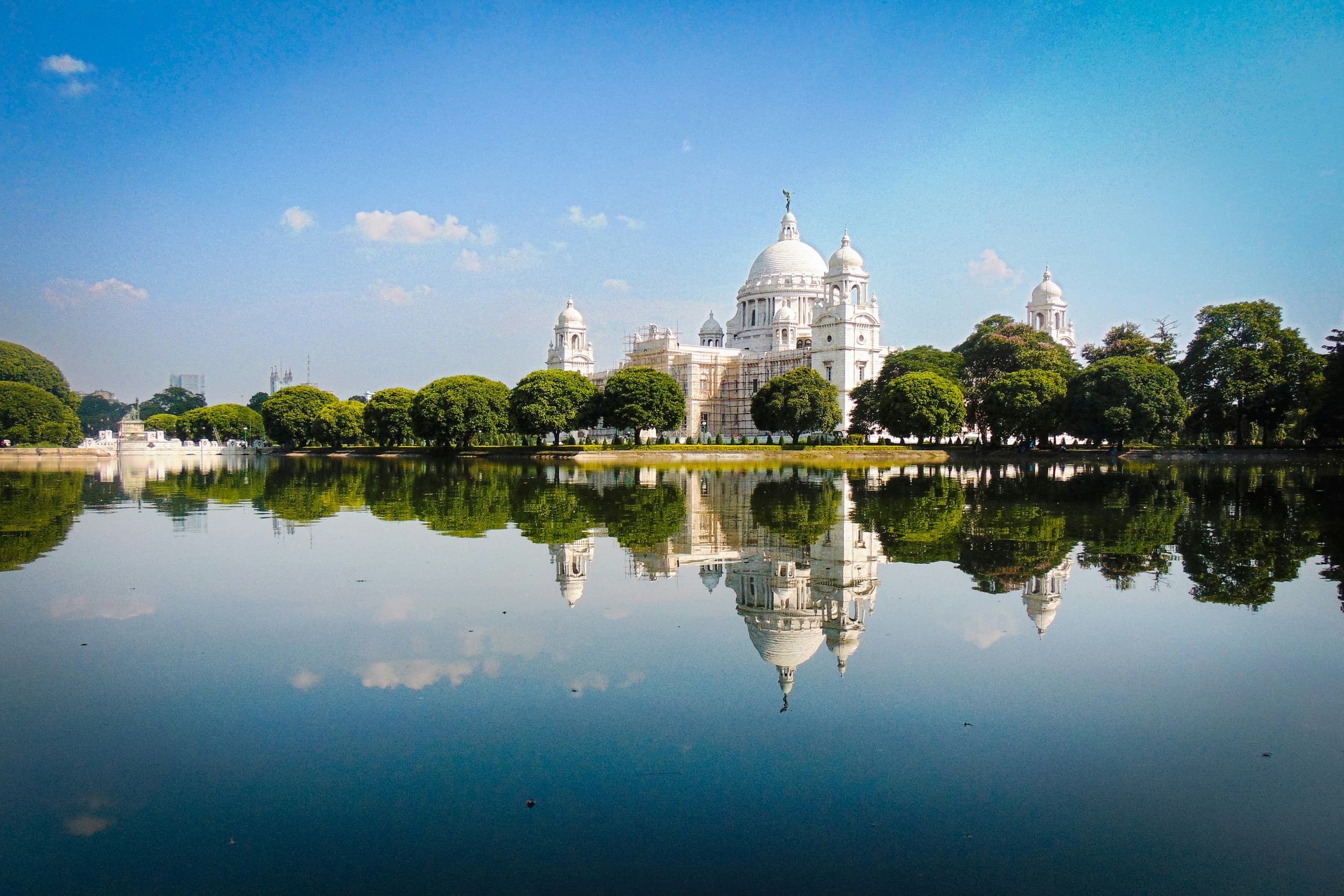
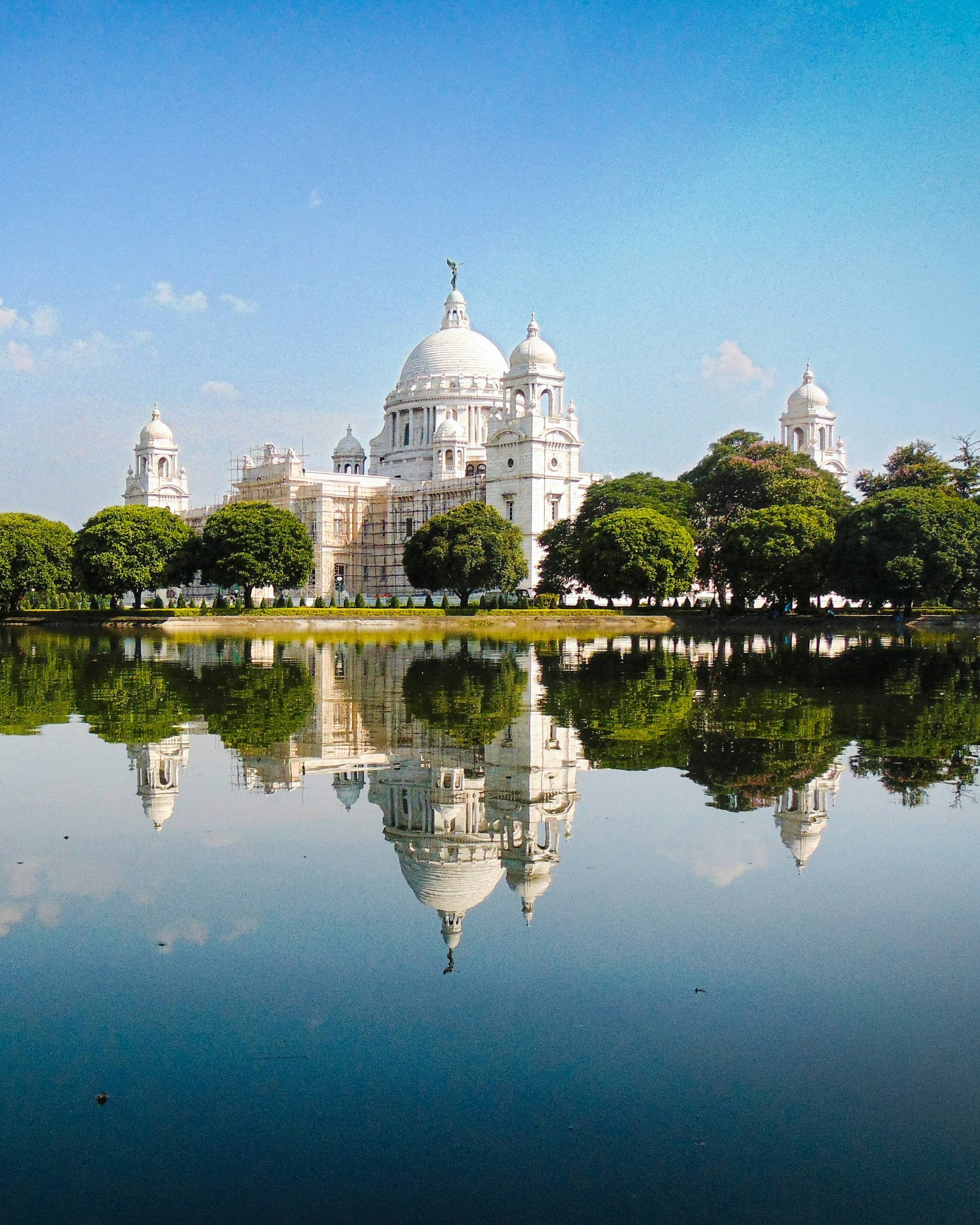
The Victoria Memorial, completed in 1906, stands as Kolkata's most recognizable monument—a white marble structure dominating the city skyline. Built to commemorate Queen Victoria's reign, the monument embodied British imperial grandeur. Post-independence, the Victoria Memorial underwent transformation—from symbol of colonial domination to representation of India's sovereignty and cultural pride. The monument features museum galleries containing Indian art, historical documents, and cultural artifacts. The architectural style blends Indo-Gothic with Italian Renaissance—a aesthetic fusion reflecting colonial artistic tastes. The structure's elevated position overlooking the Maidan (Kolkata's largest park) creates iconic cityscape views. Evening visits reveal illuminated beauty—the white marble glowing against darkening sky. The Victoria Memorial encapsulates Kolkata's complex history—British colonization, Indian resistance, eventual independence, and contemporary pride in reclaimed heritage.
Quick Facts
Completed: 1906, architectural marvel in Indo-Gothic style
Design: Blends Italian Renaissance with Indian elements
Transformation: From colonial symbol to Indian heritage monument post-independence
Tiger Hill, Darjeeling
Mountain vantage point (2,590m)—witness spectacular Kanchenjunga sunrise and possible Everest views on clear mornings.
Tiger Hill, located at 2,590 meters elevation near Darjeeling town, represents one of the Himalayas' most iconic sunrise viewpoints. Early morning ascents (approximately 4:30 AM departures) allow arrival before dawn. As darkness gradually surrenders to light, the sky transforms through spectrum of colors—purples, oranges, pinks—while surrounding peaks emerge from mist. Kanchenjunga, the world's third-highest peak (8,586 meters), dominates the panorama. On exceptionally clear mornings, Mount Everest (240 kilometers distant) becomes visible as distant white triangle. The experience involves patient waiting, philosophical contemplation, and profound humility before nature's scale. Local photography enthusiasts, spiritual seekers, and adventure tourists converge at Tiger Hill, creating community around shared awe. The sunrise becomes transcendent moment—personal transformation through witnessing planetary grandeur.
Quick Facts
Elevation: 2,590 meters above sea level
Primary View: Kanchenjunga peak (world's 3rd highest)
Possibility: Everest glimpses on clear mornings (240 km distant)
Dakshineswar Kali Temple
Sacred 19th-century temple (1855)—spiritually significant with architectural beauty and Swami Vivekananda connections.
Dakshineswar Kali Temple, constructed in 1855 on the Hooghly River's eastern bank, represents Hindu spirituality's architectural expression. Built by Rani Rashmoni, a wealthy widow, the temple combines Bengali architectural traditions with Hindu religious requirements. The iconic temple structure features twin towers (chhatris) and elaborate ornamentation. The main deity—Kali, goddess of destruction and transformation—attracts pilgrims seeking liberation from ego's illusions. The temple complex includes twelve smaller Shiva temples arranged in rows, a shrine dedicated to Sri Ramakrishna Paramahamsa (19th-century spiritual master who lived here), and expansive courtyards. Swami Vivekananda, Sri Ramakrishna's foremost disciple, spent formative years at Dakshineswar, developing philosophical vision that transformed India's spiritual consciousness. The temple remains actively worshipped—daily rituals, pilgrim visits, and spiritual communities maintaining 170 years of continuous religious tradition. Visiting Dakshineswar combines architectural appreciation with spiritual immersion.
Quick Facts
Built: 1855 by Rani Rashmoni
Deity: Kali (goddess of destruction and transformation)
Architecture: Bengali style with distinctive twin towers
Kalimpong & Kurseong
Charming Himalayan towns—tea estates, adventure activities, flower gardens, colonial-era churches and lodges.
Kalimpong (1,250 meters elevation) and Kurseong (1,450 meters elevation) represent the Darjeeling region's quieter alternative—smaller than Darjeeling yet equally beautiful. Kalimpong showcases diverse influences—Tibetan monastery culture, Bengali traditions, colonial heritage. The town serves as marketplace for regional produce—fruits, flowers, handicrafts—creating vibrant bazaar atmosphere. Nearby attractions include Kalimpong Nursery (world-renowned orchid and flower gardens), Durga Jot monastery (Tibetan Buddhist site), and riverine trekking opportunities. Kurseong, the 'land of white orchids,' offers tea plantation homestays and alpine forest beauty. Both towns provide authentic hill station experience—misty mornings, cool evenings, genuine community interactions without overwhelming tourist infrastructure. Adventure activities include paragliding from surrounding peaks, river rafting in monsoon, and trekking through rhododendron forests. Kalimpong and Kurseong appeal to travelers seeking quieter mountain explorations beyond Darjeeling's busier environment.
Quick Facts
Elevation: Kalimpong 1,250m, Kurseong 1,450m
Character: Quieter alternatives to Darjeeling with authentic charm
Attractions: Tea estates, flower gardens, monasteries, adventure activities
Must-Experience Attractions
Perfect For...
For Heritage & Cultural Immersion
Kolkata museums, Tagore sites, Dakshineswar temple, Santiniketan, literary heritage, colonial architecture.
For Nature & Adventure Seekers
Toy Train, Sundarbans tiger safaris, Darjeeling tea estates, Tiger Hill sunrise, trekking, wildlife.
For Budget Travelers
Price on request
For Culinary & Spiritual Exploration
Bengali cuisine immersion, tea culture, meditation retreats, ashrams, festival participation.
Best Time to Visit
Winter (Oct-Feb)
Best season: Clear skies 12-25°C, perfect Darjeeling weather, Tiger Hill sunrise optimal, Kolkata festivals (Durga Puja Oct), ideal trekking.
Spring (Mar-May)
Warm 20-35°C, rhododendron blooms, pleasant Darjeeling mornings, tea gardens active, ideal for tea estate visits.
Monsoon (Jun-Sep)
Heavy rainfall 20-30°C, lush green landscapes, Sundarbans accessible, tea gardens at peak productivity, peaceful atmosphere.
Post-Monsoon (Sep-Oct)
Weather clearing, Durga Puja festival celebrations, comfortable temperatures, moderate crowds, transition to peak season.
Budget Estimate
Budget Traveler
Price on request
Mid-Range
Price on request
Luxury
Price on request
flights
Price on request
food
Price on request
activities
Price on request
accommodation
Price on request
Local Secrets
Durga Puja—Intangible Cultural Heritage Festival
Kolkata's Durga Puja (September-October) was recognized by UNESCO as Intangible Cultural Heritage in 2021—mesmerizing pandals, cultural performances, and communal celebrations.
Rabindranath Tagore—Asia's First Nobel Laureate
Tagore (1861-1941) remains Asia's only Nobel Literature laureate (1913)—his influence shapes Indian education, art, and philosophy to this day.
Darjeeling Muscatel Tea—The Champagne of Teas
Darjeeling tea, cultivated on Himalayan slopes, commands premium global prices—second flush ('Muscatel') produces world-renowned flavor profile.
Indian Travelers at a Glance
India Ranking
Second most visited state in India for international tourism (after Maharashtra)
Source
Union Tourism Ministry, India Tourism Data Compendium 2025
Average Spend
Price on request
Budget Allocation
25% flights, 30% accommodation, 25% food, 15% activities, 5% miscellaneous
Travel Purpose
80% leisure/cultural tourism, 12% spiritual/pilgrimage, 8% business
Visitors In2024
31 lakh (3.1 million) international tourists (14.8% increase from 27 lakh in 2023)
Length Of Stay
Typical 5-7 days: 2-3 days Kolkata, 2-3 days Darjeeling, 1-2 days Sundarbans/other