Why Choose Wales
Wales stands as Britain's most dramatic region, where 929,000 international visitors in 2024 discovered medieval castles, pioneering adventure culture, and landscapes defying imagination. With 15% of Wales visitors exploring castles and 34% visiting coastal/beach destinations, Wales represents authentic British experience unmarked by mass tourism—experience why medieval heritage, mountain majesty, and world-class adventures define the Welsh identity.
Medieval Castles: Edward I's Iron Ring
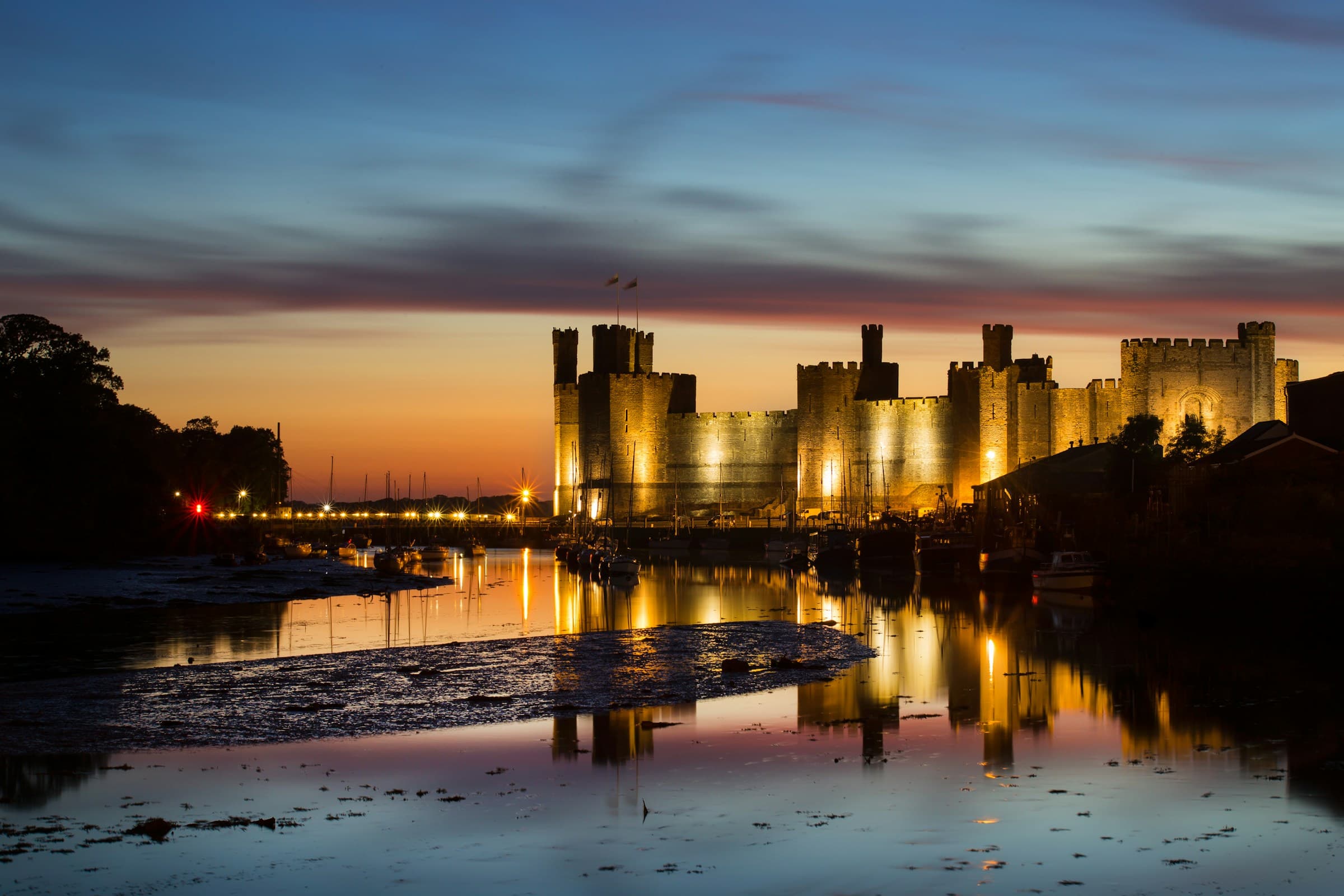
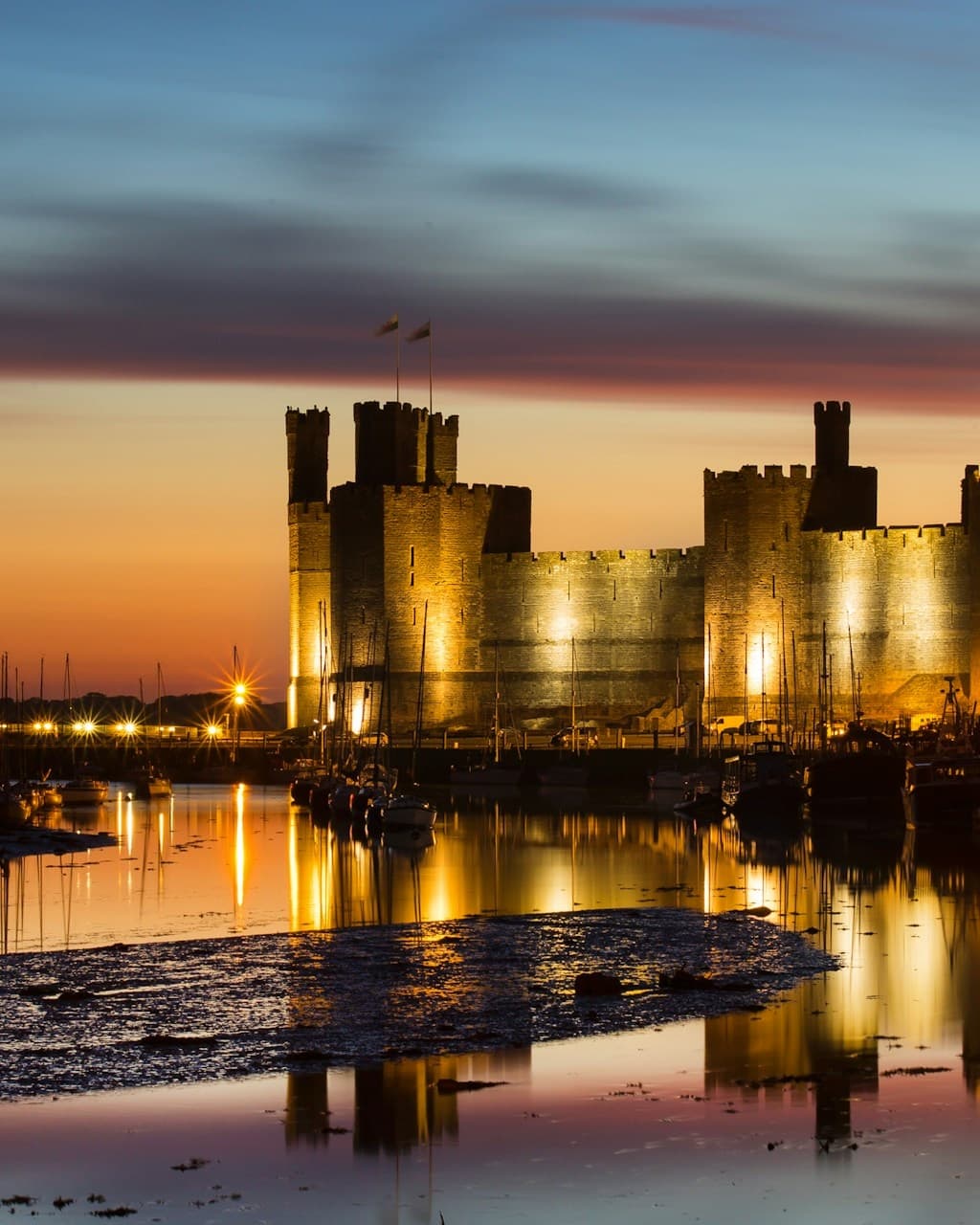
Wales preserves the most concentrated collection of medieval castles in Europe—a direct result of Edward I's 13th-century conquest and subsequent control strategy. The 'Iron Ring' comprises four UNESCO-recognized fortresses (Caernarfon, Conwy, Harlech, Beaumaris) representing military architecture's zenith. Caernarfon Castle, the most impressive, combines military functionality with imperial symbolism—the polygonal towers deliberately echoed Roman Constantinople's walls, a calculated political statement. The 47-year construction (1283-1330) consuming £25,000 (equivalent to millions in modern currency) demonstrated Edward I's determination to permanently subjugate Wales. Walking through Caernarfon's gatehouse, visitors traverse architectural innovation—the gates featured sophisticated locking mechanisms and narrow passages enabling defensive superiority. Conwy Castle, perched on a peninsula jutting into the Conwy River, presents equally dramatic fortifications where visitors climb to ramparts providing 360° views encompassing river valleys and mountain peaks. The towns surrounding castles (Caernarfon town, Conwy town) preserved medieval street patterns, creating authentic time-travel experiences. Exploring castle town walls reveals how medieval urban planning prioritized defense—narrow winding streets prevented cavalry charges, while wall gates controlled commerce. Castle visits combine architectural education with landscape immersion—understanding how geography and stone architecture worked synergistically to control populations.
Snowdonia: Mountain Majesty & Alpine Beauty
Snowdonia National Park encompasses approximately 2,100 square kilometers of dramatic mountain landscape, centering on Mount Snowdon (Yr Wyddfa—'place of eagles' in Welsh), Wales' highest peak at 1,085 meters. The mountain's cultural significance extends beyond altitude—it represents Wales' spiritual center, appearing in Celtic mythology, Welsh literature, and contemporary Welsh consciousness. Multiple climbing routes accommodate various abilities: the Tourist Path (gentlest, 9 kilometers roundtrip, 5-6 hours) ascends via well-maintained trails through vegetation zones revealing alpine ecology. The Pyg Track and Miners Track offer alternative routes combining hiking with industrial heritage—abandoned slate quarries and mining ruins trace Wales' 19th-century economic history. The Snowdon Mountain Railway, operating since 1896, provides alternative summit access via narrow-gauge train ascending through dramatic valleys, accessible to elderly, infirm, or less athletic visitors. Clear-day summit views encompass Snowdonia's entire mountain range—approximately 30 peaks exceeding 900 meters create one of Britain's most extensive alpine landscapes. The surrounding valleys (Nant Gwynant, Nant Peris) preserve traditional Welsh communities where Snowdon remains cultural centerpiece. Snowdonia's geology reveals ancient tectonic processes—Precambrian metamorphic rocks forming the mountains' cores, volcanic events creating distinctive formations, glacial erosion sculpting U-shaped valleys. Modern Snowdonia balances conservation with recreation—walking trail infrastructure accommodates 7+ million annual visitors without destroying wilderness character. The park's 930+ miles of scenic trails provide experiences from gentle riverside walks to technical scrambles demanding mountaineering skills.
Coasteering: Wales' Pioneering Adventure Innovation
Coasteering, combining cliff jumping, rock scrambling, sea swimming, and exploring hidden coves, originated in Pembrokeshire, Wales, representing Britain's most innovative adventure activity. The activity synthesizes multiple outdoor disciplines into a single immersive coastal experience—participants don wetsuits and helmets, follow professional guides across rocky shorelines, navigate narrow coastal passages, scramble up cliff faces, leap into Atlantic waters, and discover sea caves inaccessible by conventional means. Coasteering transforms coasts from visual scenic viewpoints into three-dimensional playgrounds engaging visitors physically and emotionally. The Pembrokeshire Coast, stretching 800+ kilometers along southwest Wales, provides ideal terrain: dramatic cliff formations, hidden coves, natural rock formations creating jumping points, and reasonably accessible entry/exit points. Professional coasteering guides possess specialized training enabling safe navigation of technically demanding terrain while educating participants about coastal geology, marine ecosystems, and historical context. Participants experience visceral sensations impossible through passive sightseeing: the cold Atlantic shock upon water entry, the physical challenge of cliff scrambling, the exhilaration of controlled jumping. Coasteering typically involves 2-3 hour sessions accommodating various fitness levels—operators scale difficulty from family-friendly (minimal jumping, accessible scrambles) to extreme (40-foot cliff jumps, advanced technical scrambling). The activity's growing popularity reflects broader trend toward experiential travel—visitors increasingly seek immersive activities creating memorable personal narratives beyond passive observation.
Pembrokeshire Coast: 800+ Miles of Dramatic Shoreline
The Pembrokeshire Coast represents one of Europe's most pristine and dramatically beautiful coastlines, stretching approximately 800 kilometers (500 miles) along southwest Wales. The coast's definition results from distinctive geology: Precambrian metamorphic rocks, Ordovician volcanic formations, and Silurian sedimentary deposits create colorful cliffs (reds, greens, purples) telling Earth's ancient history. The Wales Coast Path, a continuous walking trail tracing the entire Pembrokeshire shoreline, provides pedestrian access to otherwise remote coves, sea stacks, arches, and isolated beaches. The Green Bridge of Wales, a natural limestone arch spanning 60 meters, creates one of Britain's most iconic coastal formations—visitors experience the monument from multiple perspectives as the path navigates cliffs both above and alongside the formation. The Elegug Stacks (Stack Rocks), two dramatic limestone pillars rising directly from the ocean, provide photogenic subjects and seabird nesting sites (cormorants, guillemots, razorbills). St Davids, Wales' smallest city, preserves medieval character with its cathedral (final resting place of Wales' patron saint), while Whitesands Beach provides sandy swimming contrast to cliff-dominated northern sections. The coast hosts significant marine biodiversity: bottlenose dolphins frequent bays, Atlantic gray seals haul out on beaches, seabirds (puffins, razorbills, guillemots) nest on cliff ledges during summer breeding season. The Pembrokeshire Coast National Park (1952, first UK coastal national park) protects 615 square kilometers balancing conservation with recreational access. Coastal walks accommodate various abilities—short strolls connecting beach villages, multi-day treks for adventurous hikers, specialized boat tours accessing inaccessible sections.
Welsh Culture & Authentic Local Traditions
Wales maintains distinctive cultural identity within Britain—the Welsh language (Cymraeg), spoken by approximately 19% of the population natively and taught in schools, preserves Celtic linguistic heritage. Visiting Wales means encountering bilingual signage, hearing Welsh in communities (particularly rural areas and northwest), and appreciating cultural distinctiveness. Welsh cuisine embodies working-class agricultural traditions: cawl (hearty lamb and vegetable stew, the national dish, documented from the 14th century), Welsh rarebit (cheese on toast with mustard and Worcestershire sauce), laverbread (edible seaweed, nicknamed 'Welshman's caviar'), Welsh cakes (sweet griddle-cakes with dried fruit), and bara brith (fruit bread). These dishes reflect Wales' sheep-farming heritage and limited agricultural options—communal cooking traditions persisted through harsh winters, creating enduring culinary identity. Welsh hospitality, embedded in cultural values, manifests through genuine friendliness in pubs, accommodations, and casual interactions. Rugby culture permeates Welsh society—the Welsh rugby team commands national pride comparable to international football allegiances in other countries. Understanding Welsh rugby provides cultural context for understanding Welsh identity. Traditional music (folk singing, harp traditions) remains culturally significant—eisteddfod competitions (both local and international) celebrate Welsh music, poetry, and cultural performance continuing medieval traditions. Cardiff, while cosmopolitan, preserves Victorian and Edwardian architecture, cultural institutions (National Museum Cardiff, St. Fagans National History Museum), and Cardiff Bay regeneration showcasing 21st-century architectural ambition alongside heritage preservation.
Key Highlights
The essential soul of Wales.
Mount Snowdon: Wales' Sacred Peak & Alpine Beauty
At 1,085 meters, Snowdon ranks as Wales' highest mountain, offering multiple climbing routes and breathtaking Alpine panoramas across North Wales.
Mount Snowdon (Yr Wyddfa—'place of eagles' in Welsh) commands Snowdonia National Park's spiritual and geographical center. The mountain's cultural significance extends beyond altitude—it appears in Welsh mythology, literary tradition, and contemporary consciousness as Wales' symbolic heart. Multiple climbing routes accommodate diverse abilities and preferences. The Tourist Path (Llanberis Path), the most popular and gentlest route, ascends 9 kilometers roundtrip over 5-6 hours, gaining 1,000 meters elevation gradually through clearly marked trail. The route traverses multiple vegetation zones—starting in oak woodlands transitioning to alpine grassland transitioning to barren rocky summit. This ecological progression reveals how altitude shapes climate and biology. The Pyg Track combines hiking with historical interest—the trail traverses abandoned slate quarries and mining ruins, tangible evidence of 19th-century Welsh mining heritage when slate extraction dominated regional economy. The Miners Track, originally constructed to transport mining materials, provides historically authentic climbing experience. The Snowdon Mountain Railway, operating since 1896, provides alternative summit access via narrow-gauge train ascending 1,000 meters through dramatic valleys. The railway accommodates visitors unable to hike—elderly, infirm, young children, or those preferring mechanical assistance. Clear-day summit experiences provide transcendent vistas: visibility frequently extends to Snowdonia's entire 30+ peak range, coastal horizons 50+ kilometers distant, and cloud formations thousands of meters below appearing as terrestrial clouds. Weather conditions dramatically affect summit experiences—approximately 1 in 4 ascents experience complete cloud cover reducing visibility to meters. Weather unpredictability creates psychological tension converting ascent to genuine adventure rather than predictable outing. Winter ascents transform Snowdon into true alpine climbing—snow cover, ice, avalanche hazard, and severe wind demand mountaineering experience and technical equipment. Winter conditions create genuine life-threatening risk absent in summer hiking.
Quick Facts
Mount Snowdon stands at 1,085 meters above sea level, making it the highest mountain in Wales and the second-highest in the British Isles after Ben Nevis (1,345m) in Scotland
The Tourist Path ascends approximately 1,000 meters elevation over 9 kilometers roundtrip, requiring 5-6 hours for fit hikers—accessible to those without climbing experience
The Snowdon Mountain Railway, operational since 1896, operates narrow-gauge trains ascending 1,000 meters through dramatic valleys, providing alternative summit access for non-hikers
Caernarfon Castle: Medieval Fortress & Symbol of Wales
Built by Edward I starting 1283, Caernarfon represents medieval military architecture's zenith, combining defensive functionality with imperial symbolism and dramatic riverside setting.
Caernarfon Castle, perched on the banks of the River Seiont in northwest Wales, represents Edward I's most ambitious Welsh castle project—47 years of continuous construction consuming unprecedented £25,000 (equivalent to £2-3 million in modern currency). The fortress combines military engineering with political symbolism: the distinctive polygonal towers, eagle statues, and multi-colored masonry deliberately echoed Roman Constantinople's walls and Macsen Wledig's legendary fortress from Welsh mythology. This calculated architectural language communicated imperial authority and cultural dominance to Welsh populations. The castle's scale overwhelms visitors—the curtain walls stretch 300+ meters, tower walls reach 10+ meters thickness, and the King's Gate incorporates sophisticated defensive mechanisms enabling defenders to repel assault from multiple angles. The castle's four polygonal towers distinguish Caernarfon from other Edwardian fortresses: the distinctive shape concentrated defensive fire while reducing blind spots, representing military innovation. Climbing the castle towers provides 360° vistas encompassing the Menai Strait (channel separating Anglesey from mainland Wales), surrounding mountains, and downstream river valleys. The town walls, constructed simultaneously with the castle, preserved medieval street patterns where visitors trace 13th-century urban layouts. Caernarfon retained royal and military significance through subsequent centuries: the castle hosted Welsh princes' investitures, survived Civil War sieges, and functioned as military garrison into the 20th century. The castle's cultural importance to Welsh identity stems from representing both medieval Welsh heritage and English conquest—the fortress simultaneously represents historical achievement and domination, creating complex emotional relationship with the structure.
Quick Facts
Caernarfon Castle construction began in 1283 under Edward I and continued for 47 years until 1330, with total cost reaching £25,000 (equivalent to £2-3 million in modern currency)
The castle's distinctive polygonal towers deliberately echoed Roman Constantinople's walls and recalled the Welsh legend of Macsen Wledig, creating symbolic architectural language communicating imperial authority
The King's Gate incorporates sophisticated 13th-century defensive mechanisms including multiple portcullises, arrow loops, and narrow passages enabling defenders to control and repel armed assault
Pembrokeshire Coast: 800+ Miles of Dramatic Shoreline
One of Europe's most pristine coastlines stretching 800 kilometers with dramatic cliffs, hidden coves, the Green Bridge of Wales, and the Wales Coast Path.
The Pembrokeshire Coast represents one of Europe's most dramatic and pristine coastal landscapes, stretching approximately 800 kilometers (500 miles) along southwest Wales. The coast's distinctive geology—Precambrian metamorphic rocks, Ordovician volcanic formations, Silurian sedimentary deposits—creates colorful cliffs (reds, greens, purples) tellingly displaying Earth's ancient geological history. The Pembrokeshire Coast National Park (established 1952, Britain's first coastal national park) protects 615 square kilometers balancing conservation with recreational access. The Wales Coast Path, a continuous walking trail tracing the entire Pembrokeshire shoreline, provides pedestrian access to otherwise remote coves, sea stacks, arches, and isolated beaches. The trail accommodates various abilities—short village-connecting strolls, multi-day trekking adventures, and specialized boat tours accessing inaccessible sections. The Green Bridge of Wales, a natural limestone arch spanning 60 meters, creates one of Britain's most iconic coastal formations. Visitors experience the monument from multiple perspectives as the path navigates cliffs both above and alongside the formation, revealing how natural weathering creates architectural drama. The Elegug Stacks (Stack Rocks), two dramatic limestone pillars rising directly from the ocean, provide photogenic subjects and seabird nesting sites (cormorants, guillemots, razorbills). St Davids, Wales' smallest city, preserves medieval character with its cathedral containing the shrine of Wales' patron saint, while Whitesands Beach provides sandy swimming contrast to cliff-dominated northern sections. The coast hosts significant marine biodiversity: bottlenose dolphins frequent bays, Atlantic gray seals haul out on beaches, seabirds (puffins, razorbills, guillemots) nest on cliff ledges during summer breeding season (April-July). Specialized wildlife tours offer opportunities to encounter marine mammals and observe seabird colonies. The Pembrokeshire Coast's tourism infrastructure balances visitor accommodation with conservation priorities—visitor centers educate about coastal ecology and geological processes.
Quick Facts
The Pembrokeshire Coast stretches approximately 800 kilometers (500 miles) along southwest Wales with dramatic cliff formations displaying colorful geological layers from Precambrian to Silurian periods
The Wales Coast Path, a continuous hiking trail established 2012, traces the entire coastline, providing pedestrian access to remote coves and enabling multi-day trekking adventures along 800+ kilometers
The Green Bridge of Wales, a natural limestone arch spanning 60 meters, ranks among Britain's most iconic coastal formations, accessible via coastal path and visible from boat tours
Coasteering: Wales' Pioneering Adventure Activity
Originating in Pembrokeshire, coasteering combines cliff jumping, rock scrambling, sea swimming, and cave exploration—a uniquely Welsh adventure experience.
Coasteering, combining cliff jumping, rock scrambling, sea swimming, and exploring hidden coves, originated in Pembrokeshire, Wales, representing Britain's most innovative adventure activity. The activity synthesizes multiple outdoor disciplines into immersive coastal experience—participants don wetsuits and helmets, follow professional guides across rocky shorelines, navigate narrow coastal passages, scramble up cliff faces, leap into Atlantic waters, and discover sea caves inaccessible by conventional means. Coasteering transforms coasts from visual scenic viewpoints into three-dimensional playgrounds engaging visitors physically and emotionally. The Pembrokeshire Coast provides ideal terrain: dramatic cliff formations, hidden coves, natural rock formations creating jumping points, reasonably accessible entry/exit points. Professional coasteering guides possess specialized training enabling safe navigation of technically demanding terrain while educating participants about coastal geology, marine ecosystems, and historical context. Participants experience visceral sensations impossible through passive sightseeing: the cold Atlantic shock (typically 12-14°C even in summer) upon water entry, the physical challenge of cliff scrambling, the exhilaration of controlled jumping. A typical coasteering session involves 2-3 hours of activity accommodating various fitness levels. Operators scale difficulty from family-friendly experiences (minimal jumping, accessible scrambles) to extreme sessions (40-foot cliff jumps, advanced technical scrambling). The activity's growing popularity reflects broader trend toward experiential travel—visitors increasingly seek immersive activities creating memorable personal narratives beyond passive observation. Coasteering combines physical challenge, natural beauty appreciation, personal achievement, and social bonding (typically conducted in small groups of 6-8 participants). The activity's Welsh origins represent cultural pride—guidebooks describe coasteering as 'invented in Wales,' distinguishing Wales from competitor destinations.
Quick Facts
Coasteering originated in Pembrokeshire, Wales, in the 1980s, combining rock scrambling, cliff jumping, sea swimming, and cave exploration—now recognized as a uniquely Welsh adventure activity
Professional coasteering guides possess specialized training in rock climbing, water safety, rescue procedures, and coastal ecology enabling safe navigation of technically demanding terrain
Typical coasteering sessions involve 2-3 hours of activity in small groups (6-8 participants), accommodating difficulty scaling from family-friendly to extreme cliff jumping (40+ meters)
Must-Experience Attractions
Perfect For...
Medieval Castle Enthusiasts
Edward I's UNESCO Iron Ring: Caernarfon, Conwy, Harlech, Beaumaris; 47-year fortifications; medieval town walls; 15% of Wales visitors explore castles.
Mountain & Alpine Hikers
Mount Snowdon summit (1,085m), Snowdonia National Park (930+ trails), Brecon Beacons, alpine scenery, railway alternatives for non-hikers.
Adventure & Water Sports Seekers
Coasteering (cliff jumping, cave exploration), white-water rafting, surfing, kayaking, canyoning, mountain biking, Pembrokeshire pioneering adventures.
Coastal & Beach Explorers
Pembrokeshire Coast (800+ miles), Wales Coast Path (800+ km), Green Bridge of Wales, beach walks, marine wildlife (dolphins, seals), 34% of visitors prioritize coast.
Best Time to Visit
Spring (Mar-May)
Wildflowers bloom, fresh temperatures (8-14°C), Easter holidays busy, perfect hiking weather, waterfalls surge from snowmelt
Summer (Jun-Aug)
Peak season, warmest weather (15-20°C), long daylight (16+ hours July), coasteering conditions ideal, beaches perfect, hiking crowds increase
Autumn (Sep-Oct)
Golden foliage, mild temperatures (10-16°C), fewer crowds, ideal hiking/walking, Atlantic storms bring perfect surfing conditions
Winter (Nov-Feb)
Snowdonia skiing possible, dramatic weather, cozy pubs, lowest prices, 6-7 hour daylight, waterfall hiking excellent after rainfall
Budget Estimate
Budget Traveler
₹1,00,000-1,50,000
Mid-Range
₹1,60,000-2,40,000
Luxury
₹3,00,000+
visa
₹15,748-27,000 (UK Standard Visitor visa, 15-25 days processing)
flights
₹28,000-55,000 (round trip from major Indian cities via hub)
food
Budget: ₹800-1,200/day (pubs, fast food, local) | Mid-range: ₹1,800-3,000/day (restaurants, Welsh cuisine) | Fine dining: ₹3,500-7,000+/day
activities
Snowdon hike (free) | Snowdon Railway ₹2,500-3,500 | Castle entry ₹2,000-2,500 | Coasteering ₹5,000-8,000 | Pembrokeshire coastal tours ₹2,000-3,500
accommodation
Budget: ₹2,500-4,000/night (hostels, budget B&B) | Mid-range: ₹5,500-9,000/night (3-4* hotels) | Luxury: ₹15,000-28,000+/night (5-star)
Local Secrets
Canyoning in the Gorges
Remote Welsh gorges offer rappelling waterfalls, jumping into pools, scrambling through water-carved canyons—authentic adventure in Brecon Beacons wilderness.
St Davids' Whitesands Beach Sunsets
Wales' westernmost point offers some of Britain's most spectacular sunsets over the Atlantic—golden light creates unforgettable photographic moments.
The Snowdon Mountain Railway
The 1896 narrow-gauge railway ascending 1,000 meters through scenic valleys enables summit access for non-hikers—Victorian engineering + modern comfort.
Indian Travelers at a Glance
Wales Sharing
34% of Wales international visitors prioritize coast/beach; 15% include National Parks; higher adventure activity participation
Source
Visit Wales Official Statistics 2024; Visit Britain Inbound Market Data
Average Wales Spend
Estimated £800-1,000 per visit (lower than England, higher than Scotland)
Total U Kspend2024
603,000 visits from India; £806.4 million total expenditure; £1,338 average per visit
Peak Months
June-August (summer); limited winter/Christmas visitors due to weather
Total Wales Visits2024
Estimated 90,000-120,000 Indian visitors (15-20% of 929,000 total international visitors); part of 603,000 UK visits from India
Travel Purpose
78% leisure/entertainment; 22% business/conferences
Visa Stats
549,249 visitor visas issued to Indian nationals for UK in 2024 (25% of total UK visitor visas)