About Wales
Land of red dragons, ancient castles, dramatic peaks, and a fiercely proud Celtic nation where mountains meet the sea.
Wales, the 'Land of the Red Dragon', carries a history of fierce independence and cultural resilience spanning over 230,000 years of human habitation. From ancient Celtic Britons to medieval kingdoms, from Norman conquest to modern devolution, Wales has fiercely protected its identity—a unique blend of ancient Arthurian legend, martial heritage, and contemporary progressivism. The red dragon (Y Ddraig Goch) has symbolized Welsh power since the 5th century, and today remains the nation's proudest emblem.
Why Choose Wales?
The Red Dragon: Symbol of Power & Resistance
The Red Dragon (Y Ddraig Goch) has symbolized Wales since the 5th century when Welsh kings adopted it to assert power and authority. According to Geoffrey of Monmouth's Arthurian legend, a prophecy foretells a battle between the Red Dragon (Wales) and White Dragon (England)—symbolizing centuries of historical struggle for independence. The dragon appears on the national flag (officially adopted 1959) and represents enduring Welsh pride and martial heritage. Today, the Red Dragon flies on public and private buildings throughout Wales, carried by thousands of Welshmen and women during international rugby matches at Twickenham—a living symbol of cultural identity.
Medieval Castles: Edward I's Iron Ring
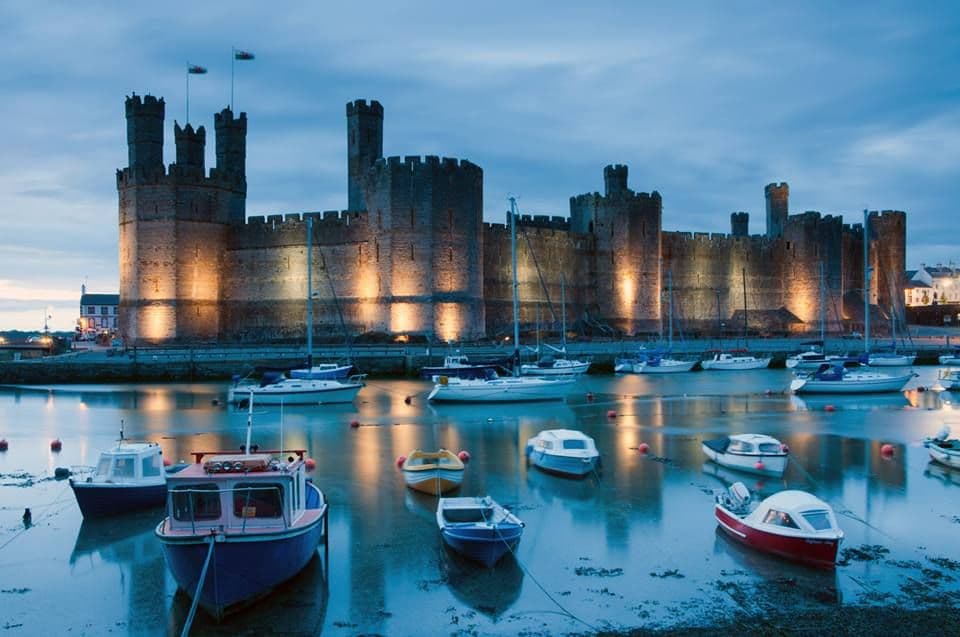
Edward I's conquest of Wales (1282-1283) resulted in the construction of the most impressive medieval fortifications in Europe. Each fortress featured concentric defenses, massive curtain walls, multiple arrowloops, and powerful gatehouses. Four castles (Beaumaris, Caernarfon, Conwy, Harlech) are designated a UNESCO World Heritage Site. New walled towns were built alongside castles, representing the totality of English control—yet Welsh resistance persisted for over a century after.
Language as Resistance: Welsh Cymraeg
Welsh (Cymraeg) is one of Europe's oldest living languages, belonging to the Celtic family and dating back 1,500+ years. Despite systematic suppression during industrialization and Tudor periods, ordinary Welsh people fiercely maintained their language as a symbol of cultural identity. Policies favoring English in schools and government nearly extinguished Welsh by the 20th century; the 1846 'Blue Books Report' famously called Welsh inferior. However, this galvanized Welsh resistance; the Welsh Language Act (1967) reversed decades of suppression. Today, over 562,000 people speak Welsh (2011 census); 56% speak it daily. Welsh is increasingly heard on streets, shops, media, and government—a remarkable cultural revival. The saying 'Cenedl heb iaith, cenedl heb galon' ('A nation without language is a nation without heart') encapsulates this deep connection.
Owain Glyndŵr's Revolt: The Dream Lives On
In 1400, Owain Glyndŵr (Owen Glendower) raised the Red Dragon standard in armed revolt against English rule, briefly re-establishing an independent Welsh state with its own national parliament (senedd). Though ultimately defeated, Glyndŵr remains a national hero symbolizing Welsh defiance and the dream of independence. The Eisteddfod (annual cultural festival) and Cymric tradition celebrate this spirit of resistance. His legacy resonates in contemporary Welsh nationalism and cultural pride.
Must-Experience Attractions
Wales Packages
Wales packages start from ₹90,000 per person (land package, flights extra) across 3 itineraries from 4 to 11 nights, as of November 2026.
Signature Collections
Handpicked signatures and top-rated escapes in Wales
Plan your Wales trip with an expert
Tell us your dates and who is travelling, and a Bayard travel expert builds the itinerary around you and sends you a quote.
Get a quote for Wales
Frequently Asked Questions
Still have questions?
Our travel experts are ready to help you craft the perfect itinerary. Reach out for personalized recommendations and support.
You Might Also Like
Discover more incredible destinations and experiences tailored for you